
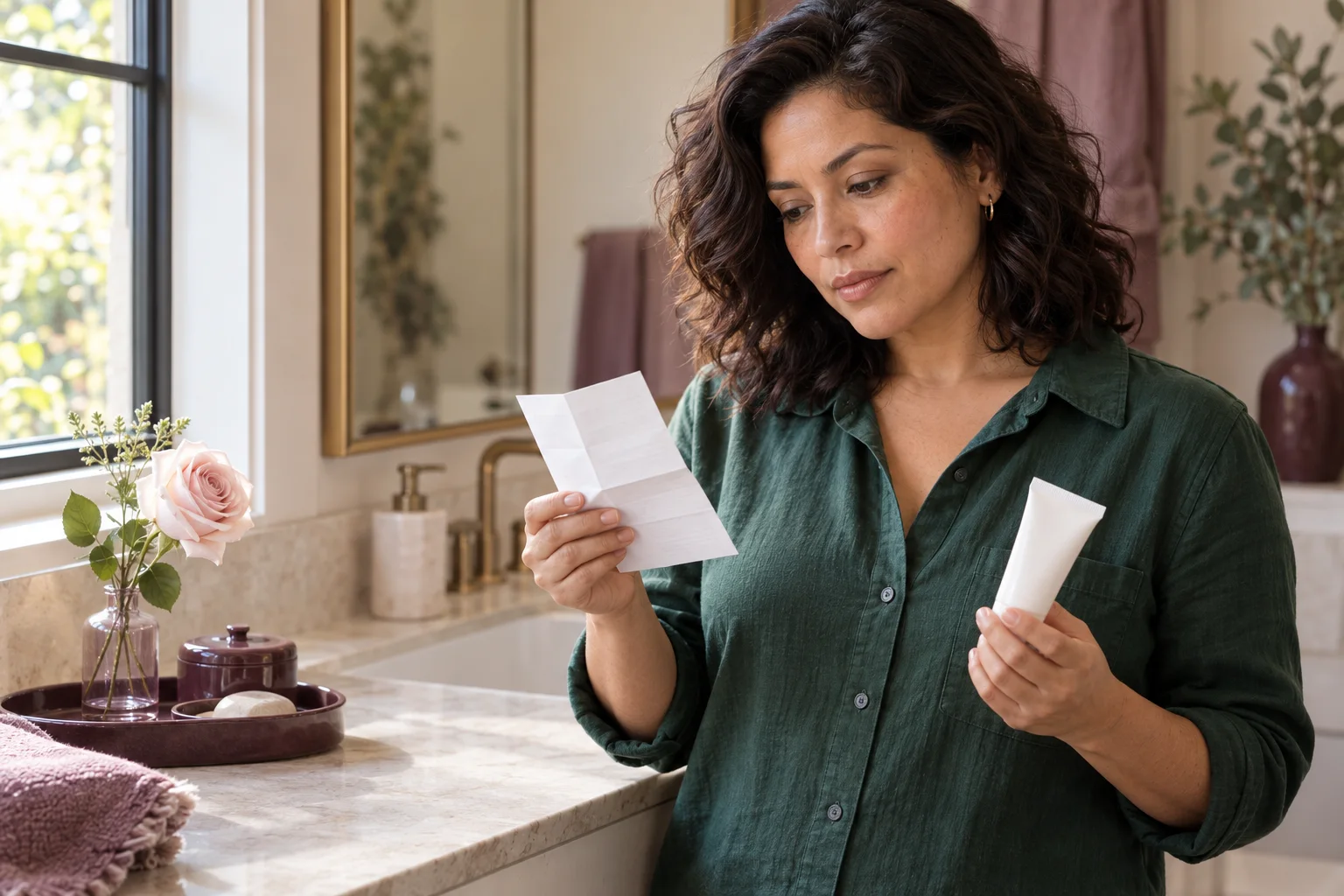
If a redness prescription seems to make your face redder, take the product name and the timing seriously. During GLP-1 treatment, an appearance concern still deserves its own assessment rather than an assumption about which medicine caused it.
Describe when the change appeared
The U.K. Medicines and Healthcare products Regulatory Agency distinguishes worsening soon after application from rebound after the effect wears off, approximately 8–12 hours later. Its 2016 safety advice tells patients to stop treatment and consult a doctor if redness or burning worsens. This is U.K. regulatory advice; confirm your local product instructions with the prescriber.[2]
For the call, write down the application time, when the change began, where it appeared and whether it burned or hurt. Include whether the skin had first looked less red. If you have a photograph, identify its time relative to application and whether you were wearing makeup. These notes describe the episode; they do not prove its cause.
A useful message is: “I used [product and strength] at [time]. At [time], [areas] became [description], with [other symptoms]. What should I do before another application, and when should I be examined?”
Keep the risk number attached to its source
The MHRA reported symptom exacerbation in up to 16% of treated patients across clinical studies. That figure covers worsening symptoms; it should not be relabeled as the rate of one specific rebound pattern. Most affected patients recovered after stopping, but the notice does not give an individual recovery deadline.[2]
Ask the clinician what to expect in your case and how to contact the practice if the course differs. Avoid using another person's online recovery timeline to decide whether your own symptoms need review.
Recognize symptoms that need urgent care
The U.S. patient information says to stop Mirvaso and go to an emergency department immediately for signs of a serious allergic reaction, including swelling of the face, lips, tongue or throat, hives, or trouble breathing. It also warns about slow heart rate, low blood pressure and dizziness, sometimes requiring hospitalization.[1]
Do not wait to finish photographs or a skin diary when emergency symptoms are present. When calling for advice, mention symptoms beyond the visible facial color rather than asking only whether the gel has “stopped working.”
Tell the team about laser procedures
A separate 2017 MHRA safety notice describes cardiovascular reactions after brimonidine use, including cases following laser procedures. The agency warns against applying it to irritated or damaged skin, including after laser therapy, because absorption may increase.[3]
If you are booking a facial laser treatment, give both the procedural clinician and the rosacea prescriber the exact gel name. Ask for written instructions about the treated skin and when that clinician considers application appropriate. Do not borrow a restart date from a different procedure.
The U.S. label also asks patients to disclose medical conditions, all medicines and skin products, pregnancy or breastfeeding, and planned laser treatment.[1] Bring the GLP-1 product name as part of that full list. This article does not establish an interaction between GLP-1 medicines and brimonidine.
Keep ordinary skin care gentle
AAD recommends a mild cleanser applied and rinsed with fingertips, gentle patting dry, moisturizer and sun protection. Avoid rubbing, scrubbing and exfoliation. For sunscreen, it recommends broad-spectrum SPF 30 or higher with water resistance; fragrance-free mineral options may be useful when other sunscreens irritate.[4]
Bring any products that sting to the review rather than adding a scrub to remove the color. Our rosacea and makeup guide addresses coverage. The oxymetazoline evidence check discusses a different prescription and its trial outcomes. Neither replaces assessment of a reaction to the product you are using.

Printed book
How to Keep Your Face on GLP-1
$12.95 + free shipping
Order Now30 day money back guarantee
This article provides general education, not a diagnosis or an individual treatment plan. Medication information refers to US sources. Discuss medication, nutrition and cosmetic treatment decisions with qualified clinicians.
Read next
Skin careAcne Scars During GLP-1: Identify the Mark Before Treatment→Skin & researchAdapalene for Photoaging: Check the 0.3% Trial and the Acne Label→Sources
- Mirvaso: U.S. prescribing information and patient informationDailyMed; prescribing information revised December 2022, posted October 2024; checked October 2026↩ Back to text
- Brimonidine gel (Mirvaso): risk of exacerbation of rosaceaU.K. MHRA, November 8, 2016; checked October 2026↩ Back to text
- Brimonidine gel: cardiovascular effects and damaged skinU.K. MHRA, June 21, 2017; checked October 2026↩ Back to text
- 7 rosacea skin care tips dermatologists recommendAmerican Academy of Dermatology; updated April 2024, checked October 2026↩ Back to text