
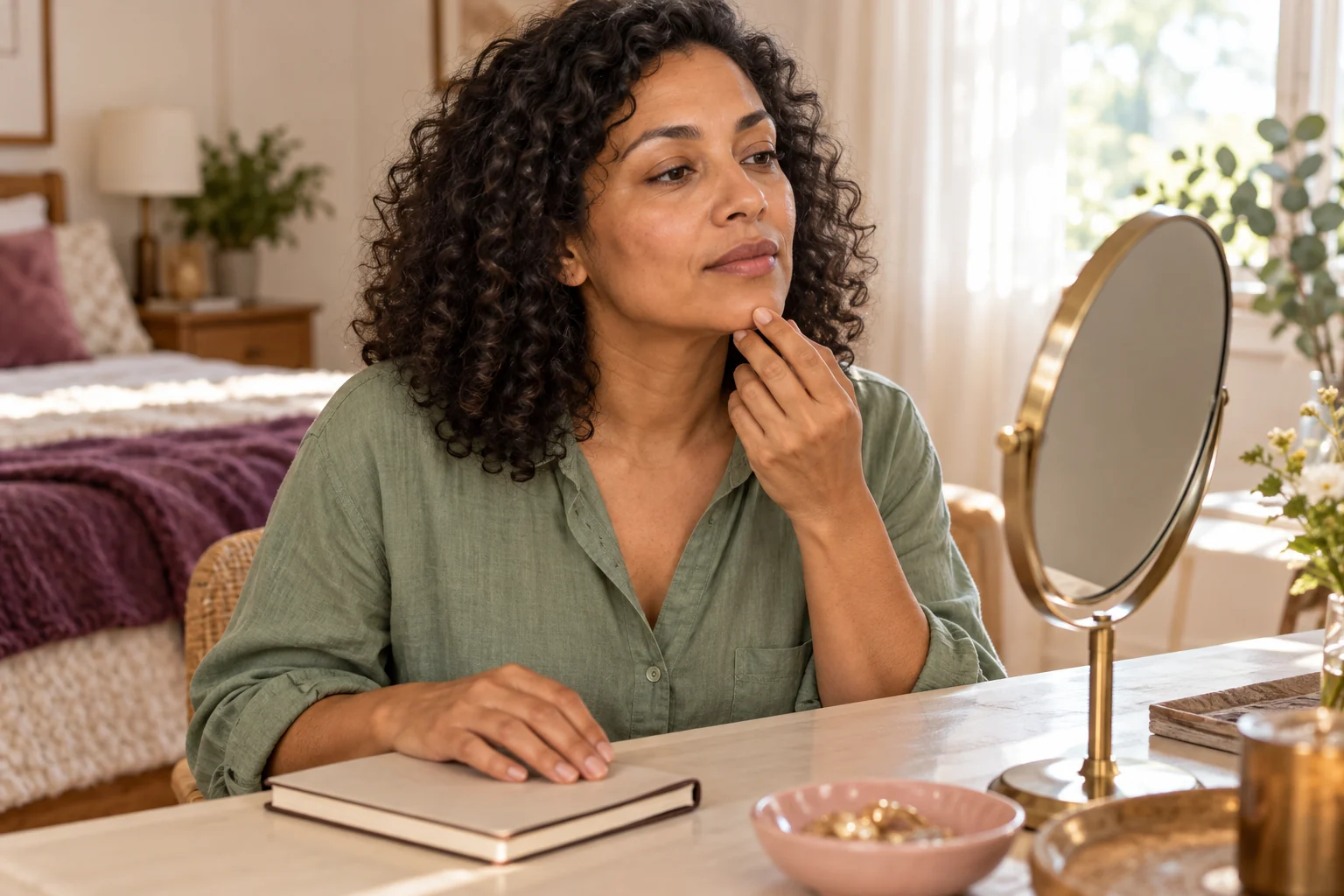
New coarse facial hair during GLP-1 treatment deserves a discussion about its pattern and possible causes.
Describe the pattern, not just one hair
Hirsutism describes excess dark, thick hair in areas such as the face, chest or back in women. The Endocrine Society identifies PCOS as a common underlying cause, although other explanations exist. Tell your clinician about irregular or absent periods as well as hair changes; a chin hair alone does not establish PCOS. [1]
Testing depends on the examination
The Society's 2018 guideline addresses premenopausal women. It suggests androgen testing for an abnormal hirsutism score, but advises against routine testing for isolated local hair growth when periods are regular and that score is not abnormal. Ask which pattern your examination shows before ordering a hormone panel. [2]
Keep the surrounding skin in the plan
AAD advises seeing a dermatologist for a sudden increase in unwanted hair or skin problems caused by removal. Shaving can irritate skin, cause cuts and produce ingrown hairs. Assessment and a tolerable removal method belong in the same conversation; repeated irritation need not become the price of coverage. [3]
These US resources are guidance, not GLP-1 trials. They establish no medication cause or hair-removal guarantee. For procedure planning, see our electrolysis consultation guide.

Printed book
How to Keep Your Face on GLP-1
$12.95 + free shipping
Order Now30 day money back guarantee
This article provides general education, not a diagnosis or an individual treatment plan. Medication information refers to US sources. Discuss medication, nutrition and cosmetic treatment decisions with qualified clinicians.
Read next
Hair & nailsBiotin on GLP-1: Hair, Nails and Blood-Test Questions→Hair & preparationBrow Tint During GLP-1: 5 Safety Checks→Sources
- HirsutismEndocrine Society↩ Back to text
- Hirsutism Guideline ResourcesEndocrine Society↩ Back to text
- 6 ways to remove unwanted hairAmerican Academy of Dermatology↩ Back to text