
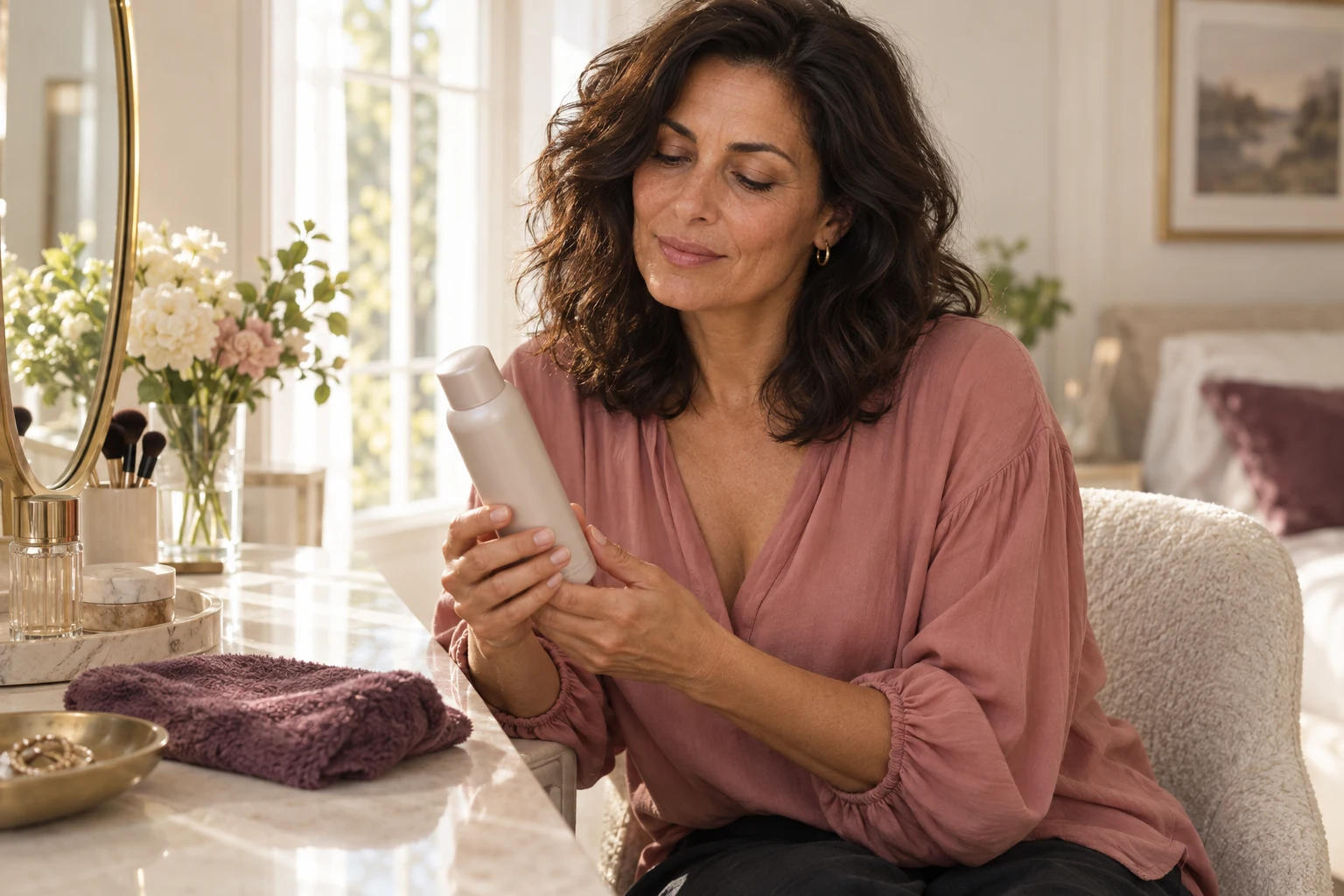
Dry shampoo can refresh a hairstyle between washes during GLP-1 treatment.
Use less, where needed
AAD advises applying small amounts where hair feels greasy, following the label's waiting time, then brushing or combing it out. Too much can leave hair stiff, gritty or visibly coated. [1]
Make the next wash specific to your hair
AAD's hair-care guidance bases washing on dirt and oil rather than a universal calendar. Shampoo belongs on the scalp. Use conditioner on the ends for fine or straight hair, or throughout the length for dry or curly hair. [2]
An application before dinner and another before work count as two uses. Schedule a shampoo-and-water wash next.
Handle the washed hair gently
AAD recommends a wide-tooth comb for wet hair. For thick curls, detangle before rinsing conditioner; for straight hair, let it dry a little first. Work from the ends upward. Absorb moisture with a towel or T-shirt rather than rubbing. [2]
Notice scalp irritation
AAD advises stopping dry shampoo if itching or burning develops. Persistent or worsening irritation after a few weeks warrants a dermatologist. It also warns that product left on the scalp can contribute to breakage or shedding. [1]
These sources do not establish that dry shampoo caused your hair changes or that changing products reverses GLP-1-associated shedding. For that assessment, read our hair-shedding guide.

Printed book
How to Keep Your Face on GLP-1
$12.95 + free shipping
Order Now30 day money back guarantee
This article provides general education, not a diagnosis or an individual treatment plan. Medication information refers to US sources. Discuss medication, nutrition and cosmetic treatment decisions with qualified clinicians.
Read next
Hair & nailsBiotin on GLP-1: Hair, Nails and Blood-Test Questions→Hair & recoveryGLP-1 Hair Shedding: A Plan Before and During Treatment→Sources
- Dry shampoo: Dermatologists' tips for getting your best resultsAmerican Academy of Dermatology↩ Back to text
- Tips for healthy hairAmerican Academy of Dermatology↩ Back to text