
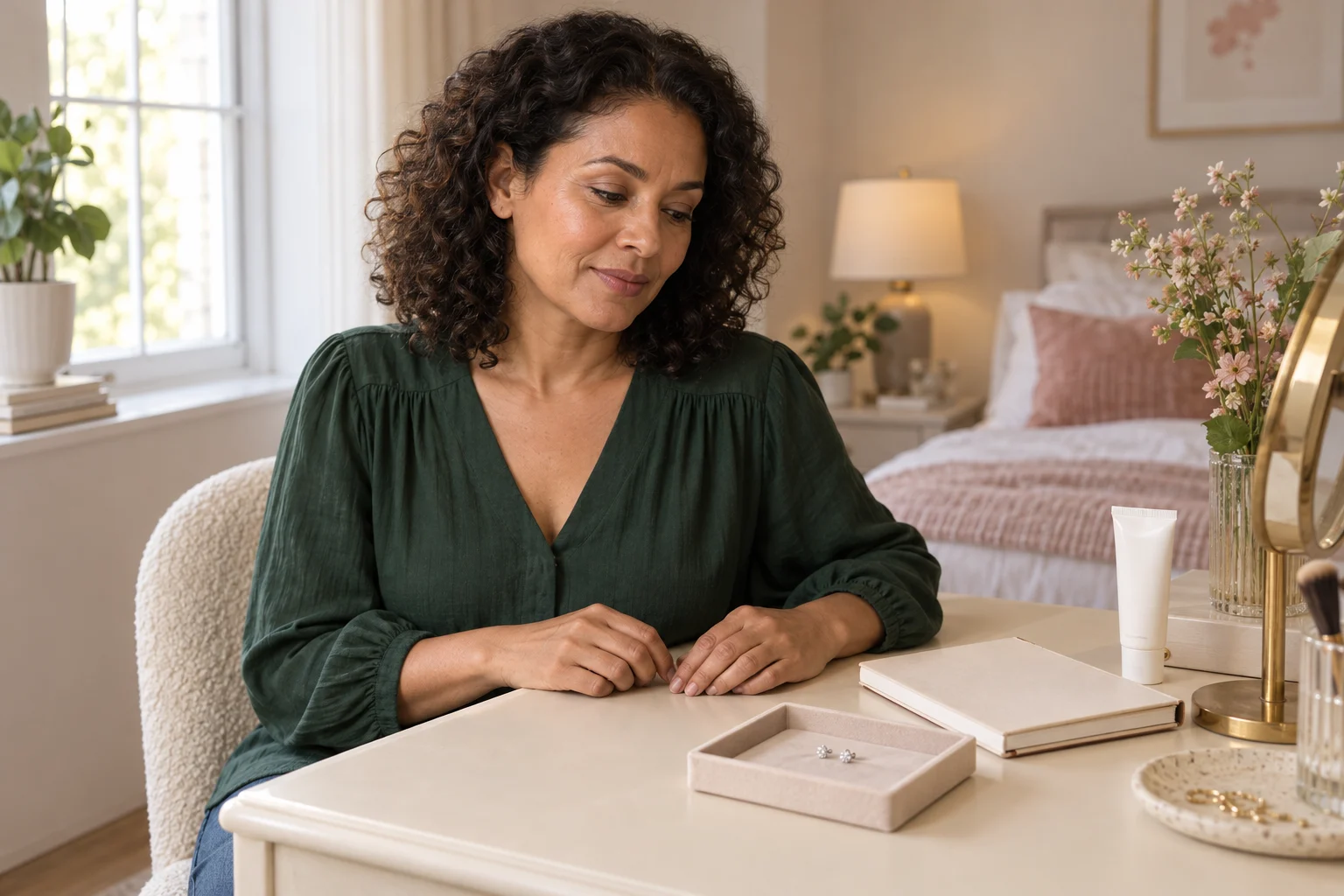
Planning earrings during GLP-1 treatment? Set out your piercing-care questions before booking.
1. Who will pierce your ears?
AAD advises an experienced piercer working in a licensed studio. [1]
2. What metal touches your skin?
Nickel-containing earrings and backs can trigger allergy. Ask about nickel-free jewelry; a recurring or blistering rash needs dermatology assessment. [2]
3. How will you clean it?
Wash hands before touching. AAD recommends daily gentle cleansing with fragrance-free cleanser and water, followed by thorough rinsing. Avoid peroxide and antibacterial soap. Its guidance also advises a thin coat of petroleum jelly from a squeeze tube around the openings. [1]
4. When can you change jewelry?
AAD advises leaving starter jewelry in for six weeks or longer, including overnight. Early removal can close the piercing. [1]
5. Which changes need assessment?
Persistent soreness, redness, puffiness or yellow drainage need dermatology review. Raised skin may signal a keloid. [1]
This US guidance does not establish how GLP-1 medicines affect piercing healing or promise a scar-free result. Read our scar-care guide.

Printed book
How to Keep Your Face on GLP-1
$12.95 + free shipping
Order Now30 day money back guarantee
This article provides general education, not a diagnosis or an individual treatment plan. Medication information refers to US sources. Discuss medication, nutrition and cosmetic treatment decisions with qualified clinicians.
Read next
Nails & careBrittle Nails on GLP-1: Review Your Manicure Routine→Skin & careChanging Beauty Mark During GLP-1: Examination Before Removal→Sources
- Caring for new piercingsAmerican Academy of Dermatology↩ Back to text
- Nickel allergy: How to avoid exposure and reduce symptomsAmerican Academy of Dermatology↩ Back to text