
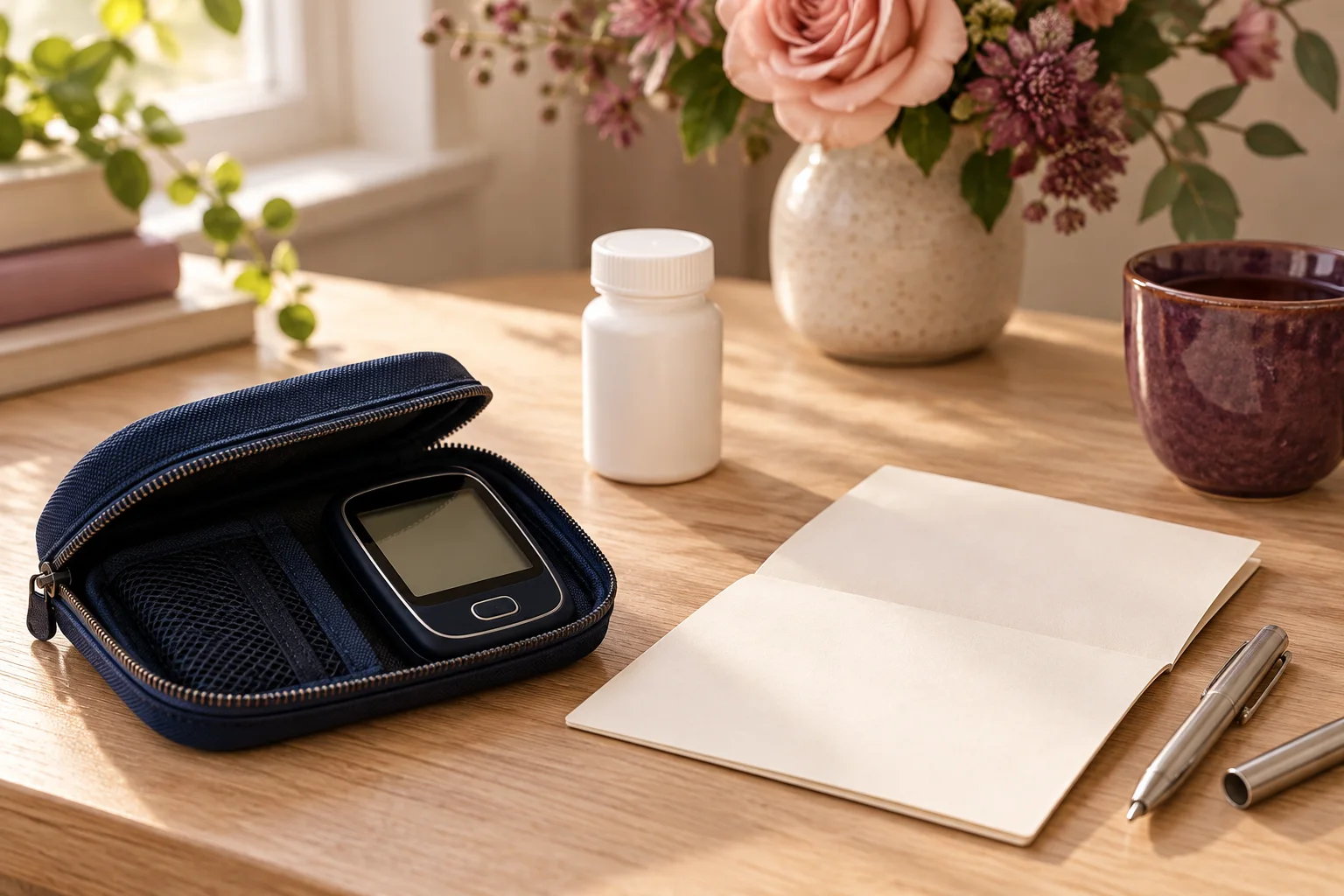
If Litfulo comes up at a hair-loss appointment and you have diabetes, bring your diabetes medicines into that conversation. A June 2026 U.S. label change gives the dermatologist and diabetes prescriber a specific issue to review together.
Start with the hair-loss diagnosis
Litfulo is ritlecitinib, prescribed in the United States for severe alopecia areata in adults and adolescents aged 12 and older. That indication does not establish a treatment for hair shedding attributed to weight loss or GLP-1 use. [1]
The American Academy of Dermatology describes an assessment of hair-loss areas, nails and medical history; some people need additional testing. Treatment decisions depend on the extent, location and duration of loss and the person's age. A new bald patch should be examined before it is assigned a cause. [3]
For questions to take to that examination, see our patchy hair-loss appointment guide.
What the June 2026 warning says
Section 5.7 reports hypoglycemia, including severe episodes, after starting JAK inhibitors in patients with diabetes. It advises considering increased glucose monitoring during Litfulo treatment and telling a healthcare provider about symptoms. [1]
This is a warning to review, not a measured interaction rate for Litfulo plus a GLP-1 medicine. That section supplies no such combination-specific estimate. Do not interpret its presence as proof that your own prescription combination will cause an episode.
Write down the names of the clinicians managing each prescription. At the appointment, ask who will set the monitoring schedule and who should receive readings or symptom reports. A plan that names a contact is easier to use than an instruction to “keep an eye on it.”
Bring the complete diabetes medicine list
NIDDK identifies insulin, sulfonylureas and meglitinides as medicines that can cause low glucose. Skipped meals, illness and changes in activity can also matter. List every prescription, the dose you currently use and any recent changes, including the GLP-1 medicine. [2]
A consultation question could be: “Before I start this hair-loss treatment, which of my medicines affect my low-glucose risk, when should I check, and who will review the results?”
Keep this separate from the hair outcome discussion. Ask the dermatologist how scalp improvement will be assessed and when the treatment decision will be reviewed. A hair photograph cannot answer a blood-glucose safety question.
Know the symptoms and the response plan
NIDDK lists shakiness, hunger, dizziness, confusion, a fast or irregular heartbeat and trouble seeing or speaking among possible symptoms. For many people with diabetes, a reading below 70 mg/dL is low; your team should confirm your threshold. Follow your agreed low-glucose treatment plan promptly. [2]
Ask what supplies to carry, when to recheck and when to seek further help. If you have been prescribed emergency glucagon, someone close to you should know how to use it.
Loss of consciousness or a seizure requires emergency help. NIDDK advises teaching others to give prescribed glucagon and call 911 immediately afterward, or to call if no emergency kit is available. Use your local emergency number outside the United States. [2]
Include the rest of the prescribing review
Litfulo's boxed warning covers serious infections, mortality, malignancy, major cardiovascular events and thrombosis. Some comparisons in that warning come from another JAK inhibitor in rheumatoid arthritis. Screening, laboratory testing, vaccines and the full medicine list belong in the prescribing review. [1]
This article highlights one label addition. It cannot determine whether the treatment's benefits outweigh its risks for you, and it is not a reason to change either prescription yourself.
Source check: U.S. Litfulo prescribing information revised June 2026; NIDDK's currently available low-glucose guidance, reviewed July 2021; and AAD's diagnosis and treatment guidance. Checked October 28, 2026. No GLP-1-specific efficacy or interaction trial is claimed here.

Printed book
How to Keep Your Face on GLP-1
$12.95 + free shipping
Order Now30 day money back guarantee
This article provides general education, not a diagnosis or an individual treatment plan. Medication information refers to US sources. Discuss medication, nutrition and cosmetic treatment decisions with qualified clinicians.
Read next
Hair & nailsBiotin on GLP-1: Hair, Nails and Blood-Test Questions→Hair & preparationBrow Tint During GLP-1: 5 Safety Checks→Sources
- Litfulo U.S. prescribing information, revised June 2026DailyMed, U.S. National Library of Medicine↩ Back to text
- Low Blood Glucose (Hypoglycemia)National Institute of Diabetes and Digestive and Kidney Diseases↩ Back to text
- Alopecia areata diagnosis and treatmentAmerican Academy of Dermatology↩ Back to text