
If you are updating your makeup routine during treatment, include the tools and products already in your bag.
Wash the tips, then dry flat
Following AAD's method, rinse the bristle tips with lukewarm running water. Swirl them in a bowl of lukewarm water mixed with a tablespoon of gentle or clarifying shampoo. Repeat shampooing and rinsing until the rinse water is clear. Press out moisture using a clean paper towel. [1]
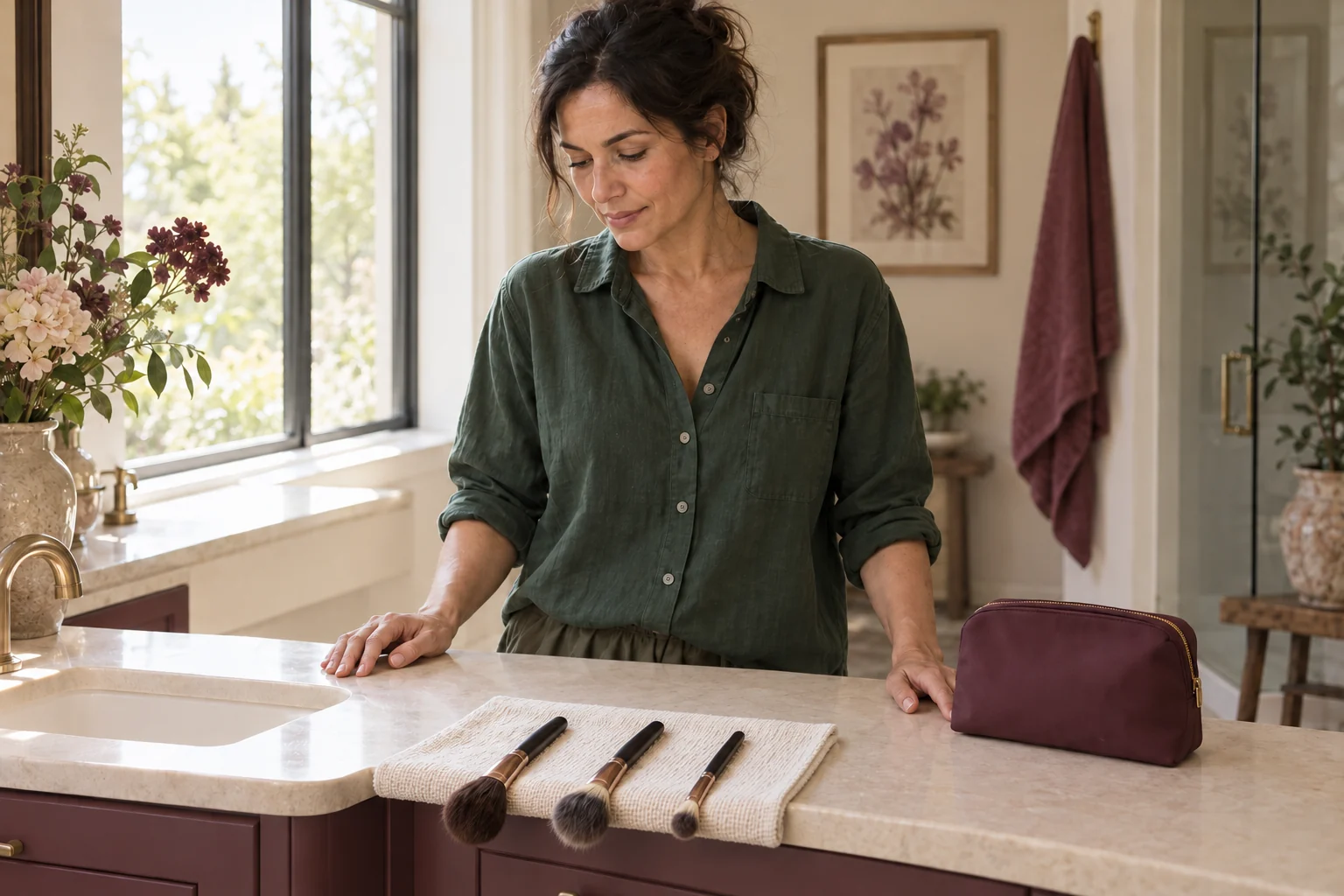
Dry brushes horizontally on a towel, with their tips extending over the counter's edge. Avoid submerging the whole brush head or standing wet brushes upright: water can loosen the adhesive connecting head and handle. [1]
Use the purchase date for mascara
FDA's eye-cosmetic guidance says to discard mascara three months after purchase. Mark that date when you buy it. Discard dried-out mascara sooner; adding water or saliva can introduce bacteria, and water dilutes its preservative. [2]
If the eye area is irritated
FDA advises stopping an eye cosmetic that causes irritation and seeing a doctor if irritation continues. Avoid eye makeup during infection or inflammation around the eye until healed. Throw away eye cosmetics used when the infection developed. [2]
These are general US cosmetic-hygiene recommendations, not evidence that GLP-1 treatment changes cleaning intervals. For a new formula, see our new skincare product testing guide.

Printed book
How to Keep Your Face on GLP-1
$12.95 + free shipping
Order Now30 day money back guarantee
This article provides general education, not a diagnosis or an individual treatment plan. Medication information refers to US sources. Discuss medication, nutrition and cosmetic treatment decisions with qualified clinicians.
Read next
Nails & careBrittle Nails on GLP-1: Review Your Manicure Routine→Skin & preparationConsidering a Chemical Peel During GLP-1 Treatment?→Sources
- How to clean your makeup brushesAmerican Academy of Dermatology↩ Back to text
- Cosmetics Safety Q&A: Eye Cosmetic SafetyUS Food and Drug Administration↩ Back to text