
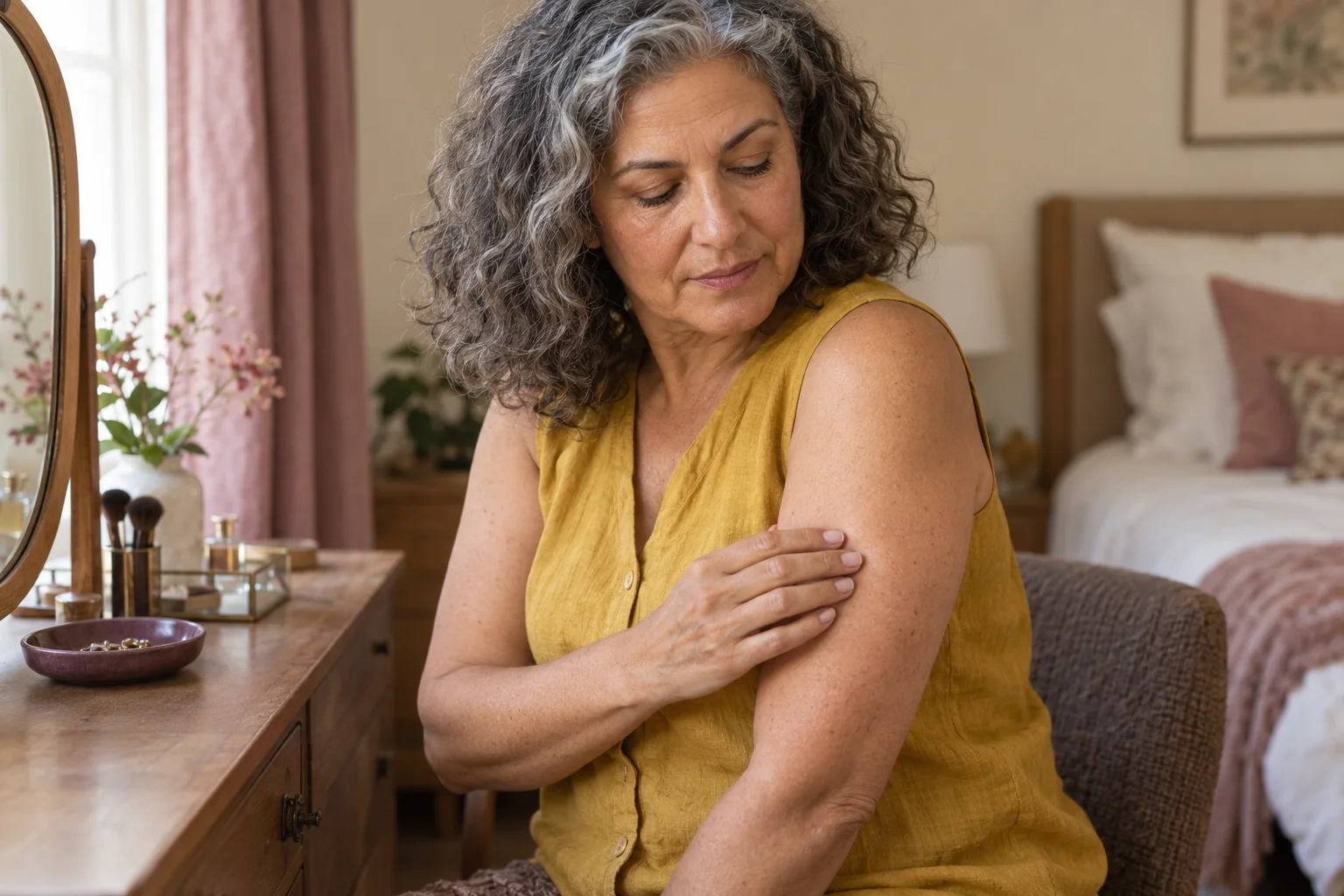
If upper-arm bumps bother you during GLP-1 treatment, bring the texture concern to a skin appointment.
Discuss a texture plan
AAD lists urea or lactic acid in moisturizing creams used for this condition. For prescribed exfoliating medicine, follow your dermatologist's amount and frequency. If it causes dryness or irritation, stop for a few days. [1]
Avoid turning care into scrubbing
AAD warns that scrubbing can irritate skin and worsen keratosis pilaris. Follow a keratolytic product's directions; excess use can leave skin raw or irritated. Apply moisturizer afterward. Shaving or waxing affected skin can produce more bumps, while self-tanner can make them more noticeable. [2]
Set a review date
Tell your dermatologist if treatment has not helped after four to six weeks. Treatment does not cure keratosis pilaris, and maintenance may be needed. Eventual clearing cannot be predicted for an individual. [1]
These US patient resources address keratosis pilaris generally. They do not establish GLP-1 treatment as its cause or promise disappearance during weight loss. For broader product decisions, see our exfoliation routine guide.

Printed book
How to Keep Your Face on GLP-1
$12.95 + free shipping
Order Now30 day money back guarantee
This article provides general education, not a diagnosis or an individual treatment plan. Medication information refers to US sources. Discuss medication, nutrition and cosmetic treatment decisions with qualified clinicians.
Read next
Body & preparationBody Shape on GLP-1: Plan for Muscle, Food and Strength→Body & preparationBreast Changes After GLP-1 Weight Loss: Ask About a Lift→Sources
- Keratosis pilaris: Diagnosis and treatmentAmerican Academy of Dermatology, US patient guidance↩ Back to text
- Keratosis pilaris: Self-care, updated June 23, 2021American Academy of Dermatology, US patient guidance↩ Back to text