
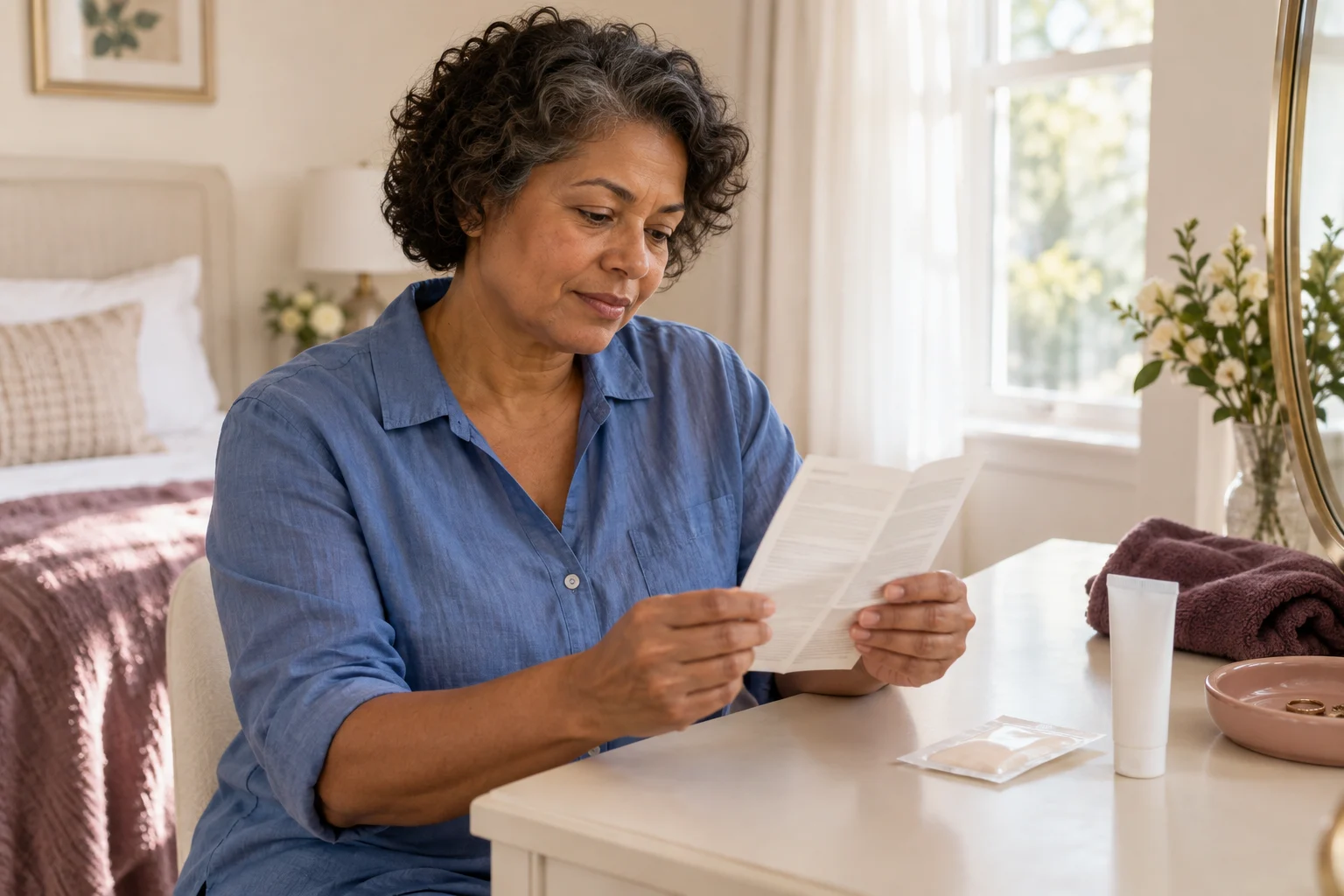
A scar-product purchase after an injury or procedure should start with the stage of healing.
Ask about silicone after closure
AAD describes silicone sheets or ointment mainly for raised scars and keloids. Sheets go on after the wound closes, often daily for months. They may reduce raised-scar features, but can cause rash or skin breakdown; report these effects to your dermatologist. This is not a treatment for every scar type. [2]
Protect healed skin from sun
After healing, AAD recommends broad-spectrum SPF 30 or higher, reapplied frequently. This may reduce red or brown discoloration. Most scars fade, but complete elimination is not expected. [1]
Check the product claim
AAD says research on onion extract and vitamins A or E for scars is limited. Discuss them with a dermatologist before use. [2]
These general US recommendations do not establish GLP-1-specific recovery. For another scar concern, read our stretch-mark treatment guide.

Printed book
How to Keep Your Face on GLP-1
$12.95 + free shipping
Order Now30 day money back guarantee
This article provides general education, not a diagnosis or an individual treatment plan. Medication information refers to US sources. Discuss medication, nutrition and cosmetic treatment decisions with qualified clinicians.
Read next
Body & preparationBody Shape on GLP-1: Plan for Muscle, Food and Strength→Body & preparationBreast Changes After GLP-1 Weight Loss: Ask About a Lift→Sources
- Minimize a scar: Proper wound care tips from dermatologistsAmerican Academy of Dermatology, US patient guidance↩ Back to text
- Scars: Diagnosis and treatmentAmerican Academy of Dermatology, US patient guidance↩ Back to text