
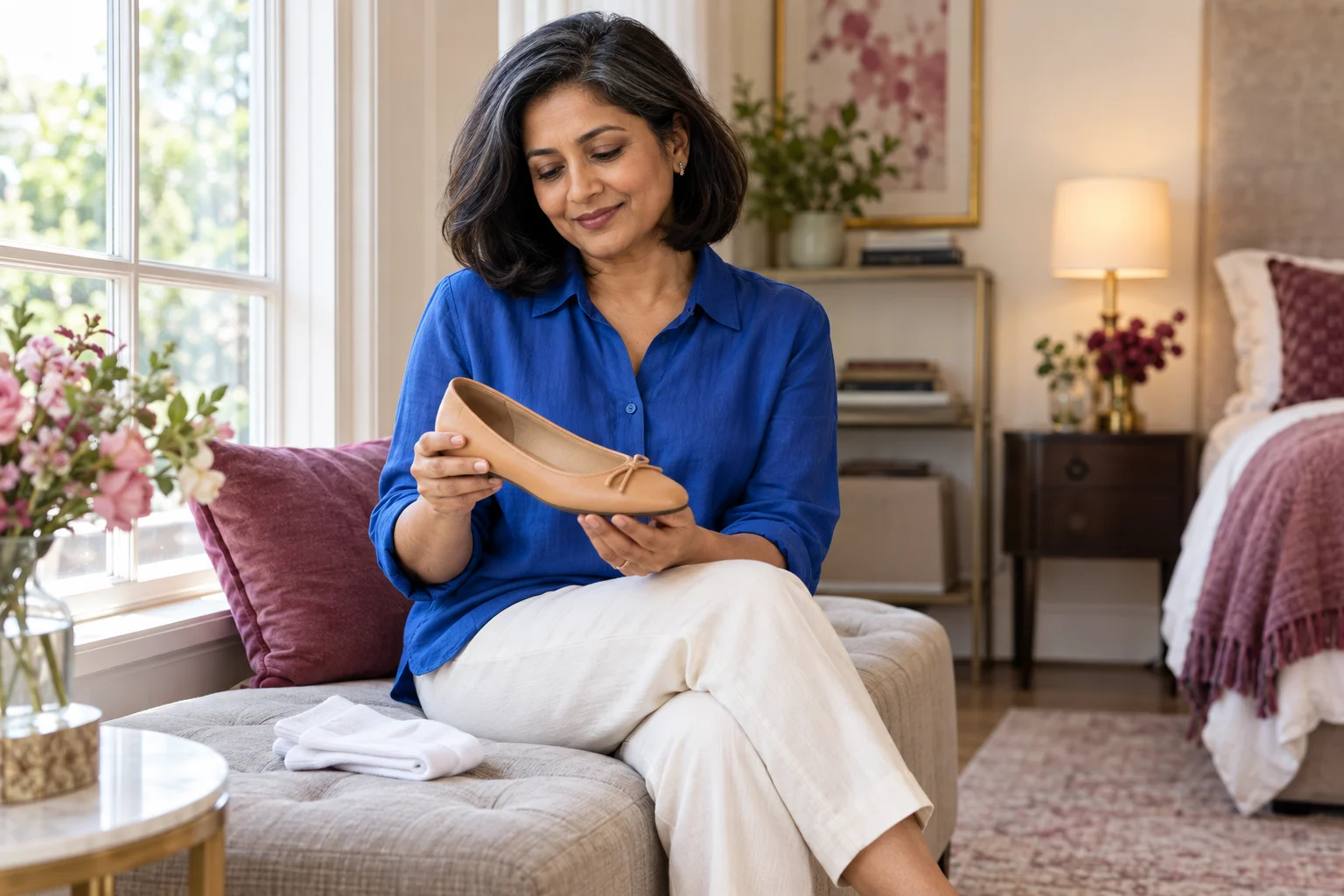
A shoe that rubs can interrupt your plans. Protect foot skin before returning to dress shoes during GLP-1 treatment.
Check fit before a long outing
AAD recommends shoes that are neither too tight nor too loose, moisture-wicking socks and stopping activity when discomfort or redness starts. These are friction precautions, not a reason to push through rubbing. [1]
Let the blister stay covered
NHS advises gentle washing, drying and a soft plaster or padded dressing. Do not burst it, peel its skin or wear the shoes that caused it until it heals. Ask a pharmacist about a suitable dressing. [2]
Know when shoe changes are insufficient
In England, NHS recommends urgent help through 111 for very painful or recurring blisters, infection signs such as heat or pus, or several blisters without a cause. Redness can be harder to see on darker skin. Elsewhere, use your local urgent-care route. [2]
These US and UK patient resources are not GLP-1 trials and offer no cosmetic guarantee. See our dry heel care guide.

Printed book
How to Keep Your Face on GLP-1
$12.95 + free shipping
Order Now30 day money back guarantee
This article provides general education, not a diagnosis or an individual treatment plan. Medication information refers to US sources. Discuss medication, nutrition and cosmetic treatment decisions with qualified clinicians.
Read next
Skin careAcne Scars During GLP-1: Identify the Mark Before Treatment→Skin careAzelaic Acid for Acne Marks on GLP-1: Trial and Label Checks→Sources
- How to prevent and treat blistersAmerican Academy of Dermatology↩ Back to text
- BlistersNHS↩ Back to text