
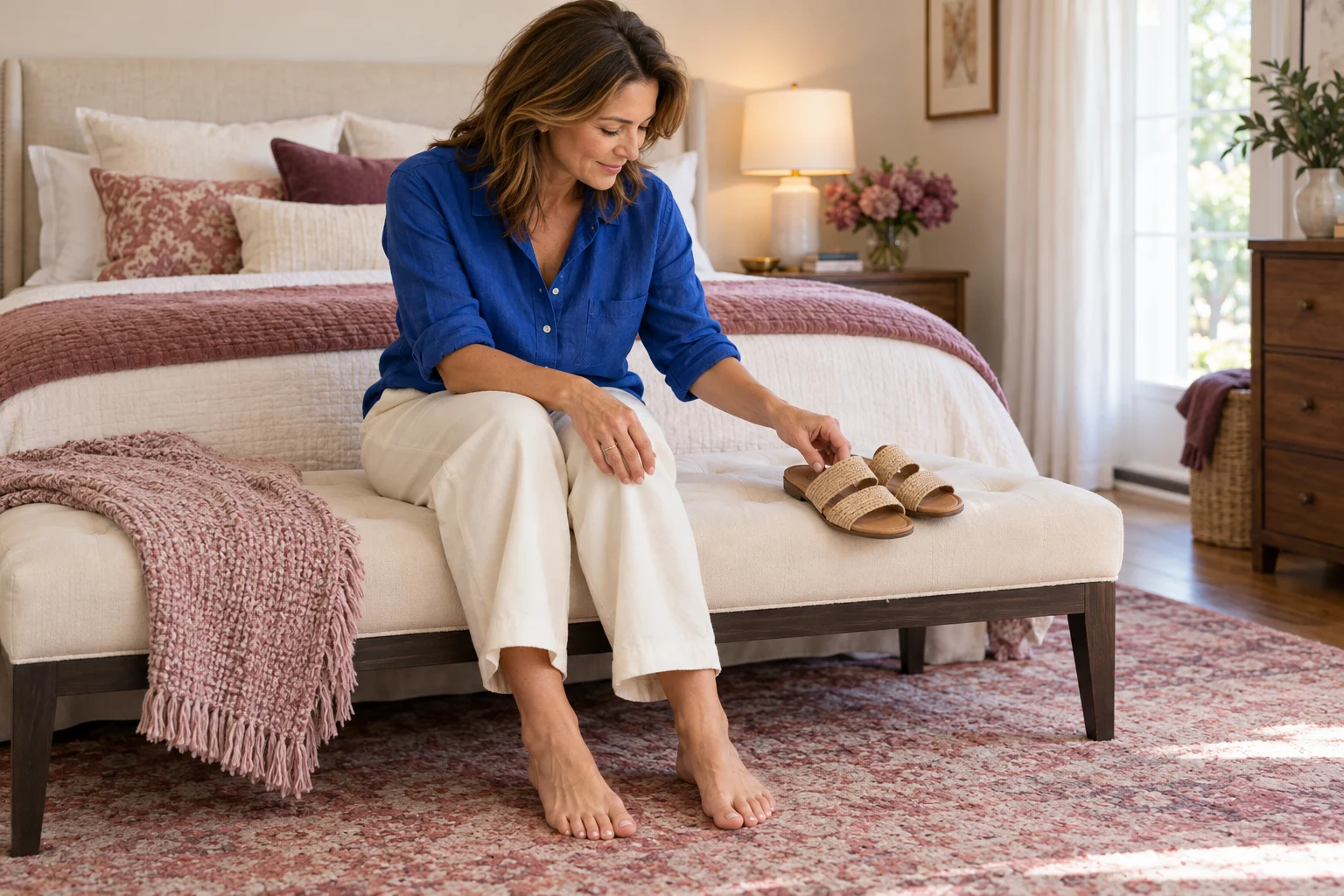
A sore toenail during GLP-1 treatment deserves attention before a pedicure.
Look at the painful edge
DermNet describes an ingrown nail as a nail edge digging into nearby skin, often on the big toe. Tight shoes and incorrectly trimmed nails are common contributors. Injury and abnormal nail shape can also contribute. [1]
Leave the corner alone
For an ingrown toenail, the NHS advises leaving the nail to grow out, avoiding picking and choosing wide shoes or sandals. Its home-care advice includes warm salty-water soaks, then keeping the foot dry afterward. [2]
Know when to seek care
Seek medical care if home care fails, pain and swelling occur with pus, or you feel feverish or shivery. If you have diabetes and an ingrown toenail, contact a clinician. The NHS notes that foot problems can be more serious with diabetes. [2]
These New Zealand and UK resources provide general guidance, not evidence of GLP-1 causation or a recovery guarantee. For a different nail concern, read about nail lifting and discoloration.

Printed book
How to Keep Your Face on GLP-1
$12.95 + free shipping
Order Now30 day money back guarantee
This article provides general education, not a diagnosis or an individual treatment plan. Medication information refers to US sources. Discuss medication, nutrition and cosmetic treatment decisions with qualified clinicians.