
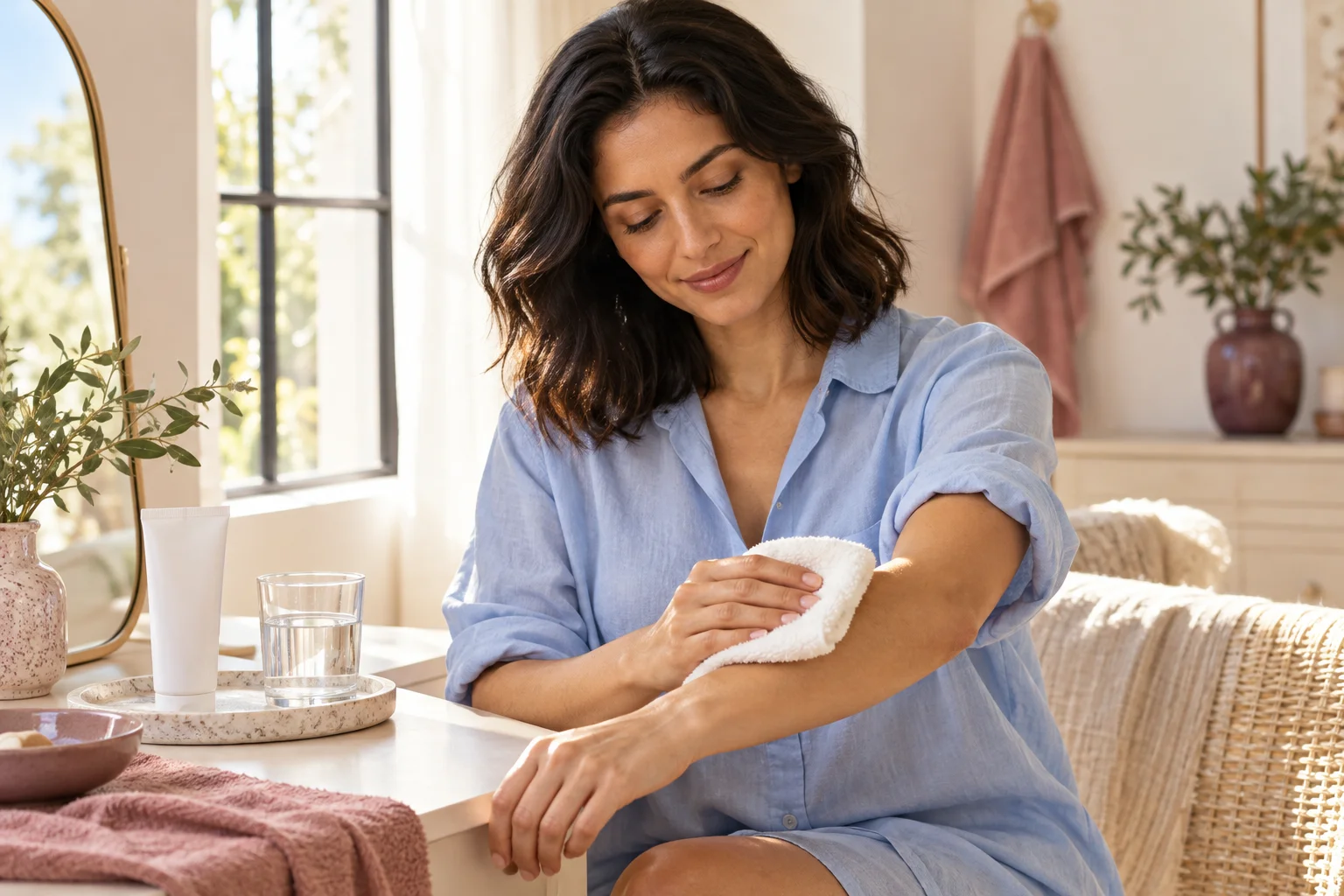
If skin peels after sun exposure during GLP-1 treatment, review the burn before trying to smooth it.
Cool and soothe first
Get indoors, cool the skin with a shower and pat dry. AAD recommends an aloe vera or soy moisturizer applied while skin remains damp. Leave blisters intact. These measures soothe discomfort; they do not erase UV damage. [1]
Leave peeling skin alone
AAD advises against exfoliating sunburned skin or open wounds. NHS guidance says not to scratch or pull away peeling skin. Leave the scrub and brush aside. [2] [3]
Recognize a reason for urgent care
NHS advises urgent assessment after sun exposure for blistering or swelling, very high temperature or shivering, tiredness, dizziness, nausea, headache or muscle cramps. Its referral route is a UK service; US readers should contact a clinician or urgent-care service promptly. [3]
These US and UK guidance pages are not GLP-1 studies and promise no cosmetic recovery. For later routine decisions, see our exfoliation guide.

Printed book
How to Keep Your Face on GLP-1
$12.95 + free shipping
Order Now30 day money back guarantee
This article provides general education, not a diagnosis or an individual treatment plan. Medication information refers to US sources. Discuss medication, nutrition and cosmetic treatment decisions with qualified clinicians.
Read next
Skin careAcne Scars During GLP-1: Identify the Mark Before Treatment→Skin careAzelaic Acid for Acne Marks on GLP-1: Trial and Label Checks→Sources
- How to treat sunburnAmerican Academy of Dermatology↩ Back to text
- How to safely exfoliate at homeAmerican Academy of Dermatology↩ Back to text
- SunburnNHS, UK guidance↩ Back to text