
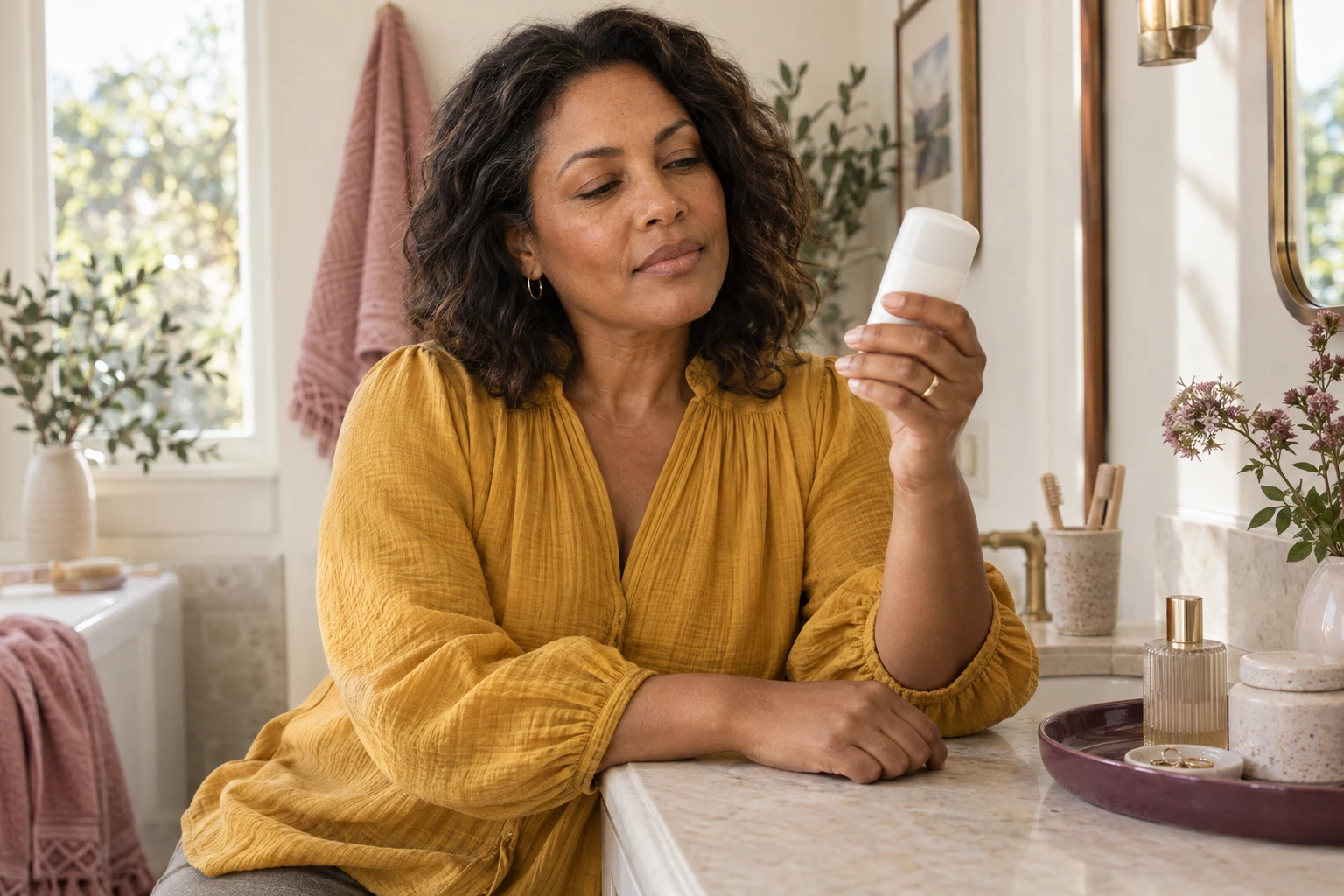
Reviewing underarm products before or during GLP-1 treatment?
Check the application instructions
For antiperspirant in a hyperhidrosis treatment plan, AAD advises applying it to dry skin before bed and letting it dry completely. Dry skin makes irritation less likely. Follow your product's directions and your dermatologist's plan. [1]
Report irritation or discoloration
AAD says to tell your dermatologist if an antiperspirant causes irritated skin or underarm discoloration. The clinician may suggest spacing applications or changing the formulation. [1]
Keep the product in its intended area
AAD advises against covering the entire body with whole-body deodorant: ingredients can irritate sensitive areas. It specifically cautions against fragranced products in the groin. Unusual or strong odor can warrant a dermatologist's assessment. [2]
These US guidance pages do not establish that GLP-1 treatment caused sweating or skin changes, or that this routine restores appearance. For a rash in a fold, see our skin-fold assessment guide.

Printed book
How to Keep Your Face on GLP-1
$12.95 + free shipping
Order Now30 day money back guarantee
This article provides general education, not a diagnosis or an individual treatment plan. Medication information refers to US sources. Discuss medication, nutrition and cosmetic treatment decisions with qualified clinicians.
Read next
Nails & careBrittle Nails on GLP-1: Review Your Manicure Routine→Skin & careChanging Beauty Mark During GLP-1: Examination Before Removal→Sources
- Hyperhidrosis: Diagnosis and treatmentAmerican Academy of Dermatology↩ Back to text
- Should I use whole-body deodorant?American Academy of Dermatology↩ Back to text