
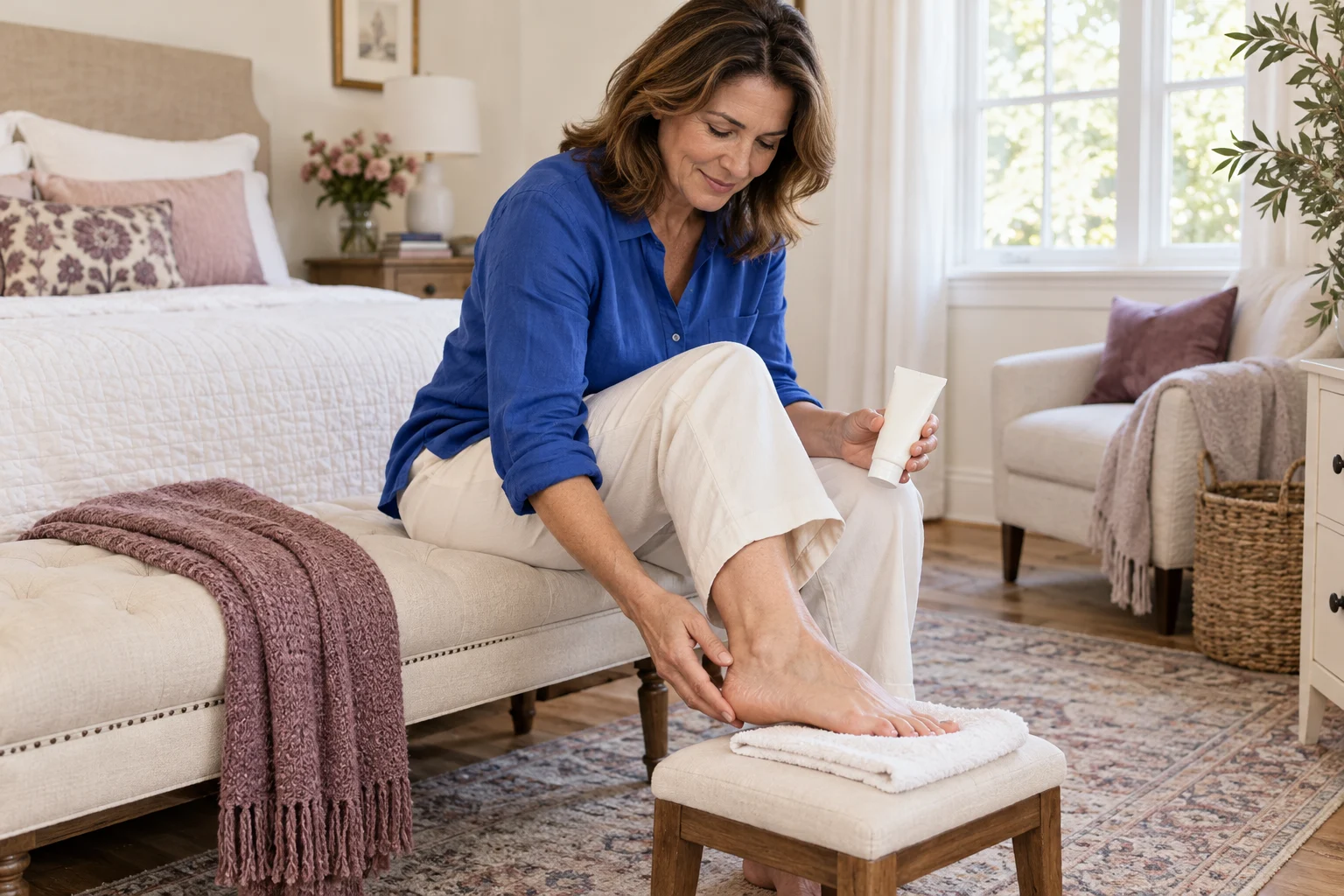
If rough heels bother you during GLP-1 treatment, include foot care in your appearance routine.
Check the shoes
AAD advises avoiding open-backed, worn-out or poorly fitting shoes. Severe cracks or dryness that does not improve warrant a dermatologist visit. [1]
Diabetes changes the foot-care plan
NIDDK advises people with diabetes to discuss callus care with a foot doctor, use pumice only if directed, and avoid cutting calluses or using corn-removal products. Moisturizer belongs on the tops and bottoms of feet, not between toes. [2]
Know when to call
For people with diabetes, NIDDK advises calling a clinician right away for foot skin that becomes red, warm or painful, or a cut, blister or bruise that has not begun healing after a few days. [2]
These US sources offer general guidance, not GLP-1-specific findings or a smooth-skin guarantee. NIDDK advice here is for people with diabetes. For broader washing habits, see our dry-skin routine.

Printed book
How to Keep Your Face on GLP-1
$12.95 + free shipping
Order Now30 day money back guarantee
This article provides general education, not a diagnosis or an individual treatment plan. Medication information refers to US sources. Discuss medication, nutrition and cosmetic treatment decisions with qualified clinicians.
Read next
Nails & careBrittle Nails on GLP-1: Review Your Manicure Routine→Skin & careChanging Beauty Mark During GLP-1: Examination Before Removal→Sources
- How to care for dry, cracked heelsAmerican Academy of Dermatology↩ Back to text
- Diabetes & Foot ProblemsNational Institute of Diabetes and Digestive and Kidney Diseases↩ Back to text