
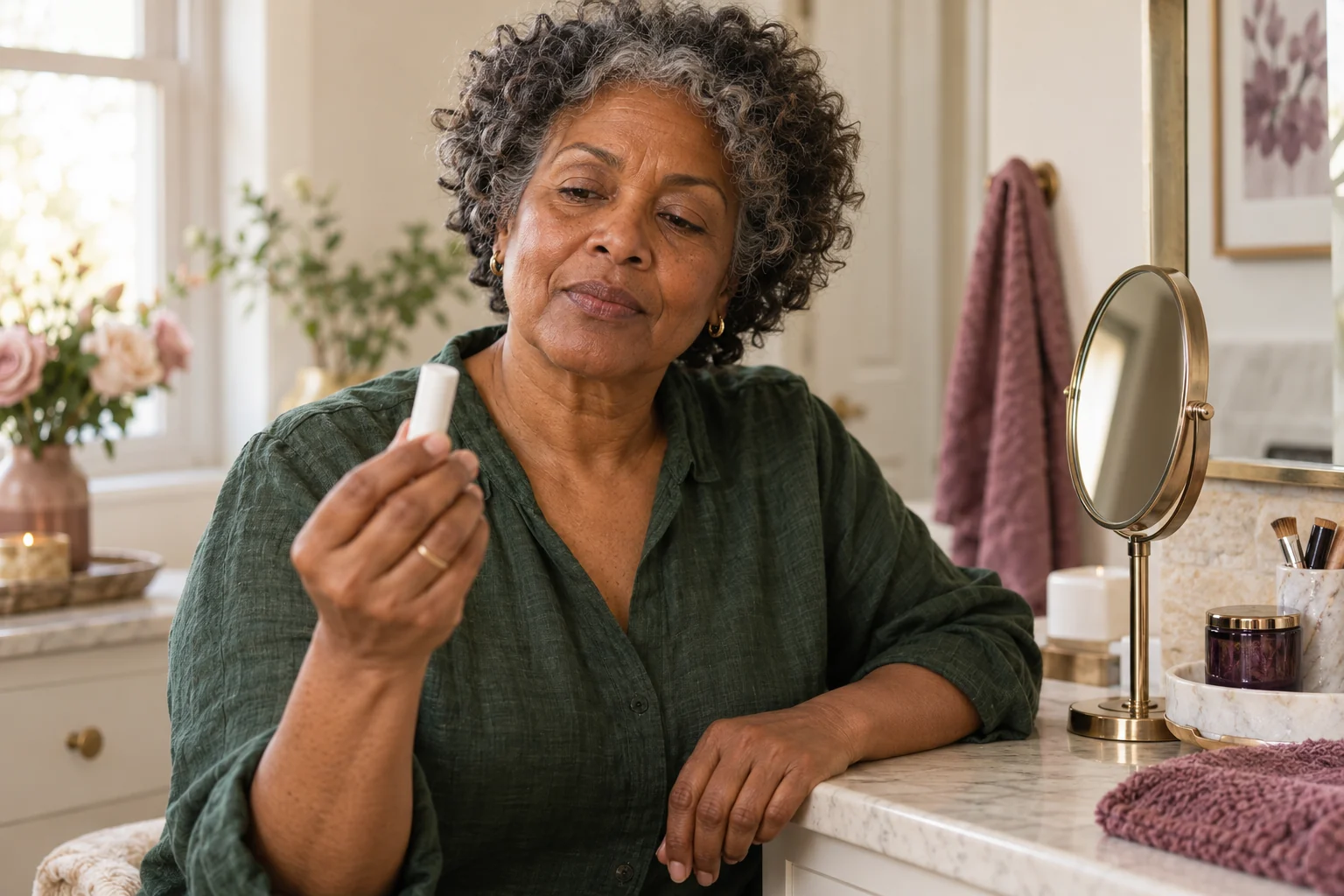
Dry, cracked lips during GLP-1 treatment are a reason to review what touches them.
Choose a non-irritating balm
AAD recommends a non-irritating balm several times daily and before bed. For very dry, cracked lips, it suggests a thick ointment such as white petroleum jelly. [1]
NHS advises washing hands before applying balm and avoiding sharing it because sharing can spread germs. It also advises against repeatedly licking lips or picking and biting flaky skin. [2]
Protect lips outdoors
AAD recommends non-irritating lip balm with SPF 30 or higher, containing zinc oxide or titanium oxide, reapplied every two hours outdoors. [1]
NHS lists cold weather, dry air, wind, sun damage, dehydration, injury and allergies among possible causes. The timing of chapping does not by itself identify your GLP-1 as the cause. [2]
Know when care needs an assessment
AAD recommends dermatology assessment if lips do not heal after two to three weeks of self-care. This is general guidance, not a promised treatment deadline. [1]
NHS recommends seeing a GP if lips are hot, painful and swollen because this can indicate infection. A pharmacist can advise on treatments and whether you need a doctor. [2]
These US and UK pages do not test GLP-1-specific lip care. For dryness beyond the lips, read our dry-skin routine guide.

Printed book
How to Keep Your Face on GLP-1
$12.95 + free shipping
Order Now30 day money back guarantee
This article provides general education, not a diagnosis or an individual treatment plan. Medication information refers to US sources. Discuss medication, nutrition and cosmetic treatment decisions with qualified clinicians.
Read next
Nails & careBrittle Nails on GLP-1: Review Your Manicure Routine→Skin & preparationConsidering a Chemical Peel During GLP-1 Treatment?→Sources
- 7 dermatologists' tips for healing dry, chapped lipsAmerican Academy of Dermatology↩ Back to text
- Sore or dry lips, reviewed February 13, 2025NHS, United Kingdom↩ Back to text