
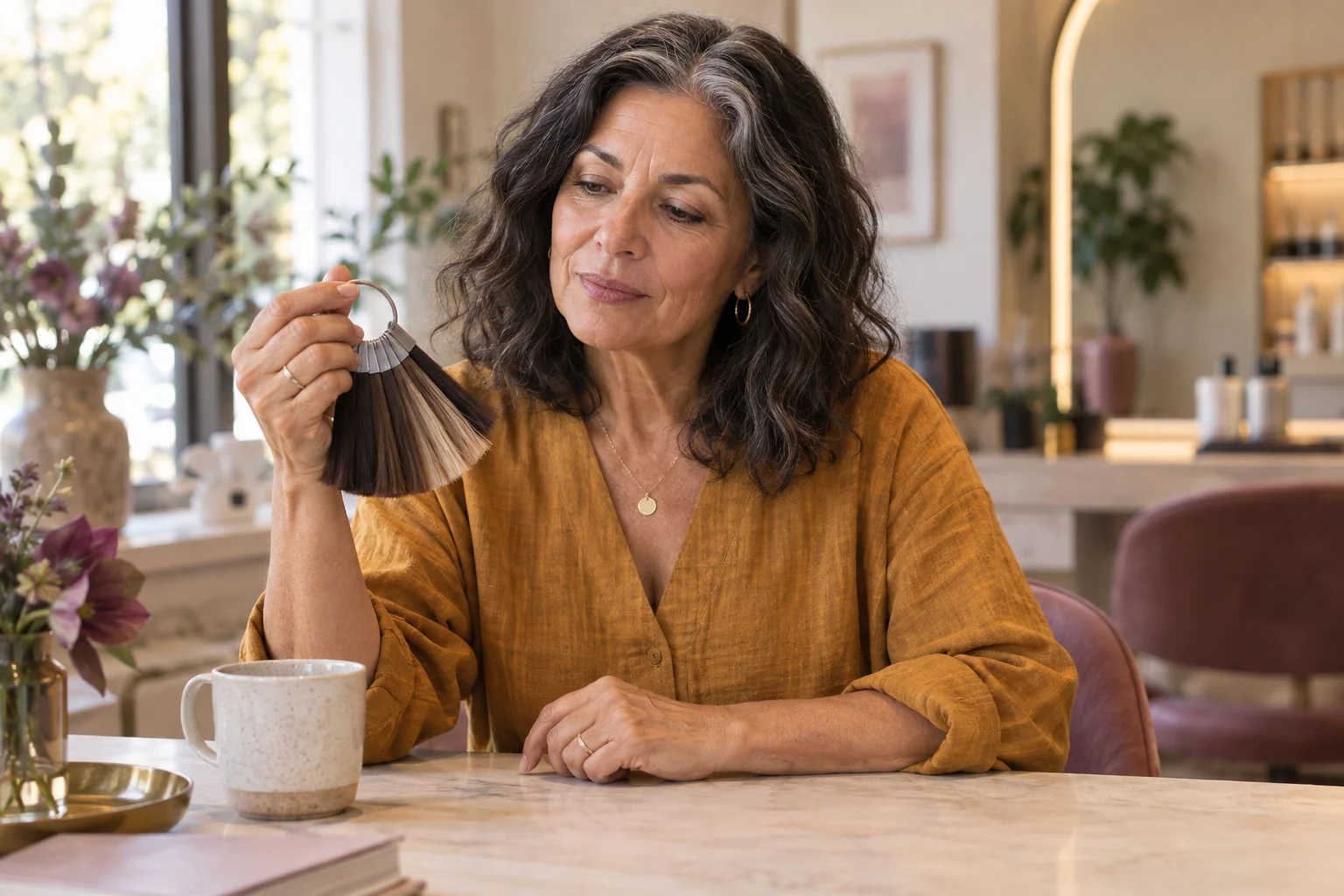
If your hair is thinning during GLP-1 treatment, review the next color appointment before covering your roots.
Check the scalp and service dates
FDA advises against dyeing an irritated, sunburned or damaged scalp. Its checklist says to wait at least 14 days after bleaching, relaxing or perming before using dye. [2]
Bring the dates of those services and details of earlier dye reactions. Ask the stylist which product is proposed and how to check its ingredients. FDA advises consulting a healthcare provider after a dye reaction. [2]
A familiar dye still needs its label check
FDA recommends the product's skin test before every use. Sensitivity can develop with repeated exposure, and formulas may change. A previous uneventful coloring does not exclude a later reaction; a negative skin test does not guarantee that dyeing will cause no reaction. [2]
Discuss the planned shade change
AAD's general coloring guidance recommends staying within three shades of your natural color. It notes that greater lightening needs higher peroxide volumes and causes more damage. Ask how much lightening the proposed look requires; this advice does not establish that coloring fragile hair is harmless. [3]
The same guidance recommends a wide-brimmed hat outdoors because sun exposure can leave colored, bleached or permed hair weak, dry and brittle. [3]
Keep shedding assessment separate
These US guidance pages do not test a GLP-1-specific coloring routine or promise regrowth. For new shedding, read our hair-shedding assessment guide.

Printed book
How to Keep Your Face on GLP-1
$12.95 + free shipping
Order Now30 day money back guarantee
This article provides general education, not a diagnosis or an individual treatment plan. Medication information refers to US sources. Discuss medication, nutrition and cosmetic treatment decisions with qualified clinicians.
Read next
Hair & nailsBiotin on GLP-1: Hair, Nails and Blood-Test Questions→Hair & careDry Shampoo During GLP-1 Treatment: Keep the Scalp in the Routine→Sources
- Hair loss: Tips for managingAmerican Academy of Dermatology↩ Back to text
- Hair DyesUS Food and Drug Administration↩ Back to text
- Coloring and perming tips for healthier-looking hairAmerican Academy of Dermatology↩ Back to text