
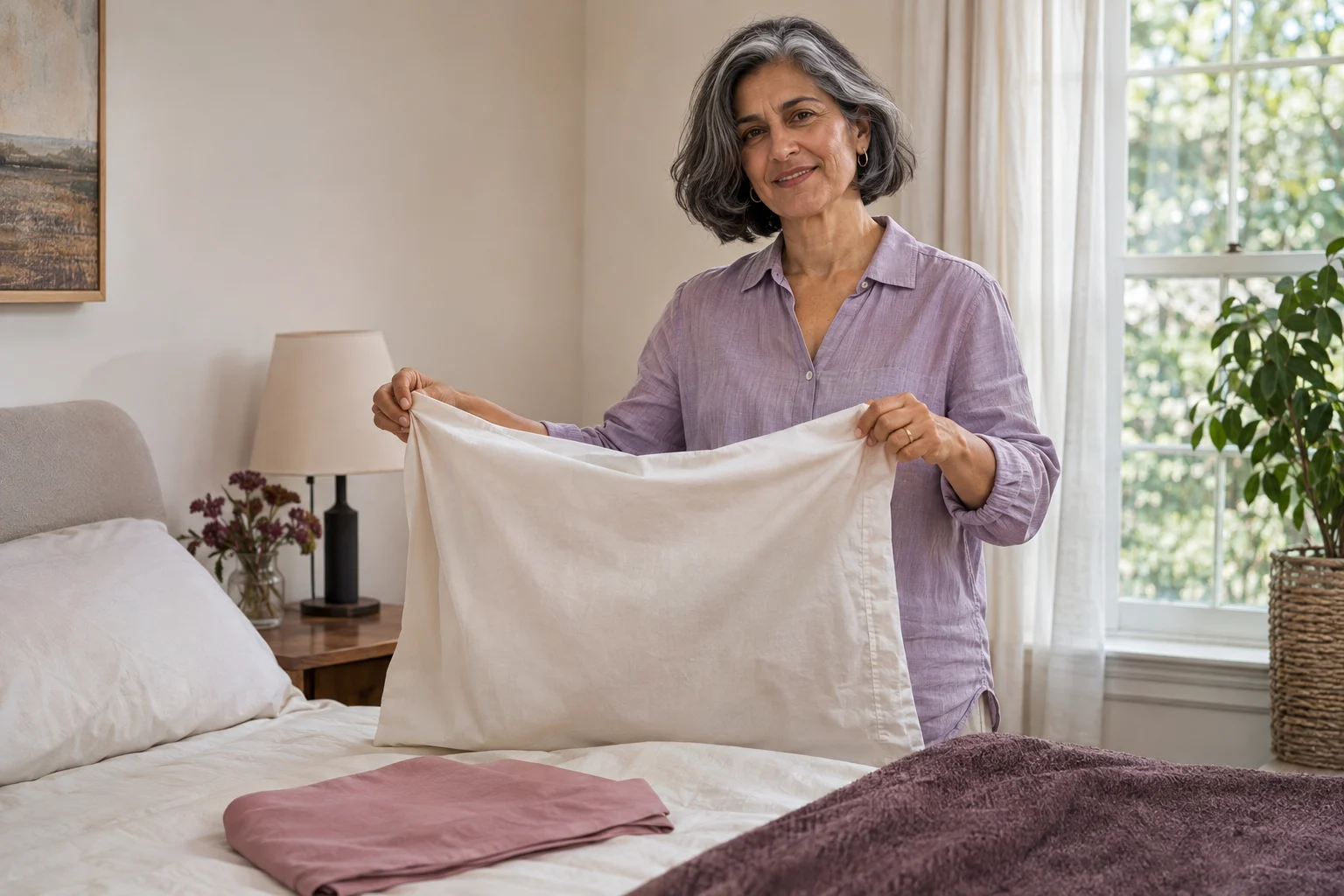
A smooth pillowcase can be a bedding preference. When a seller adds an acne-treatment claim, check whether the cited study used the same fiber and finish. “Silk-like” describes an appearance or feel; it does not identify silk content.
What the posted results show
The investigator-blinded randomized study enrolled 40 people for 12 weeks, with 20 starting in each group. Mean lesion counts at week 12 were 36.6 with the synthetic fabric and 30.7 with cotton. The secondary outcome, mean percentage reduction, was 13.1% and 21.7%, respectively. [1]
Those averages do not favor the synthetic pillowcase. The posted record provides no between-group statistical analysis for these outcomes and explicitly flags the small sample as a limitation. Wake Forest University was the sponsor; Precision Fabrics Group was a collaborator. [1]
The record supplies evidence about that particular product and comparison. It cannot establish that every cotton case is better, that every silk case fails or that a particular pillowcase treats breakouts occurring during GLP-1 use.
Match the purchase to the evidence
Before paying extra for an acne claim, read the fiber-content label. Then check whether the study product also had a coating, antimicrobial treatment or other finish. Those details affect what was compared. A familiar fabric name in a headline is not enough.
Look for a result alongside the study description. “Clinically tested” can describe a product that entered a study, regardless of whether it performed better than its comparator. Here, the posted numbers are available, so there is no reason to stop at the trial title.
If a seller cites a different trial, check that record separately. This article does not assess every bedding study or establish a fabric prescription for acne.
Hair-product residue is a more specific question
AAD explains that oily hair products can cause small bumps near the hairline, forehead or back of the neck. When such products are responsible, care includes stopping the pore-clogging product and washing residue from items the head touches, including pillowcases, sheets, hats and headbands. Clearing may take four to six weeks after the product is stopped. [2]
Consider what touches the bedding: leave-in conditioner, styling oil, pomade or a nighttime hair product. Bring the product names and the location of the bumps to your clinician. Changing fabric while continuing the suspected product leaves an important part of that discussion unresolved.
Keep acne care gentle
AAD recommends washing gently up to twice daily and after sweating, using fingertips and a non-abrasive cleanser. Scrubbing with tools can irritate skin. [3]
Choose bedding you can wash according to its care label and replace when soiled. Keep a fabric purchase separate from decisions about acne treatment. If breakouts continue, describe where they occur, when they started and which skin and hair products you use.
For another product-evidence distinction, see coconut oil and hair-fiber studies. For washing habits, read the face-washing routine guide.

Printed book
How to Keep Your Face on GLP-1
$12.95 + free shipping
Order Now30 day money back guarantee
This article provides general education, not a diagnosis or an individual treatment plan. Medication information refers to US sources. Discuss medication, nutrition and cosmetic treatment decisions with qualified clinicians.
Read next
Skin & researchAcne Moisturizers: Hydration and Water Loss Had Different Results→Skin careAcne Scars During GLP-1: Identify the Mark Before Treatment→Sources
- NCT00767104: Silk-like pillowcase trial and posted resultsWake Forest University, ClinicalTrials.gov; results first posted April 10, 2017↩ Back to text
- Are your hair care products causing breakouts?American Academy of Dermatology↩ Back to text
- Acne: Tips for managingAmerican Academy of Dermatology↩ Back to text