
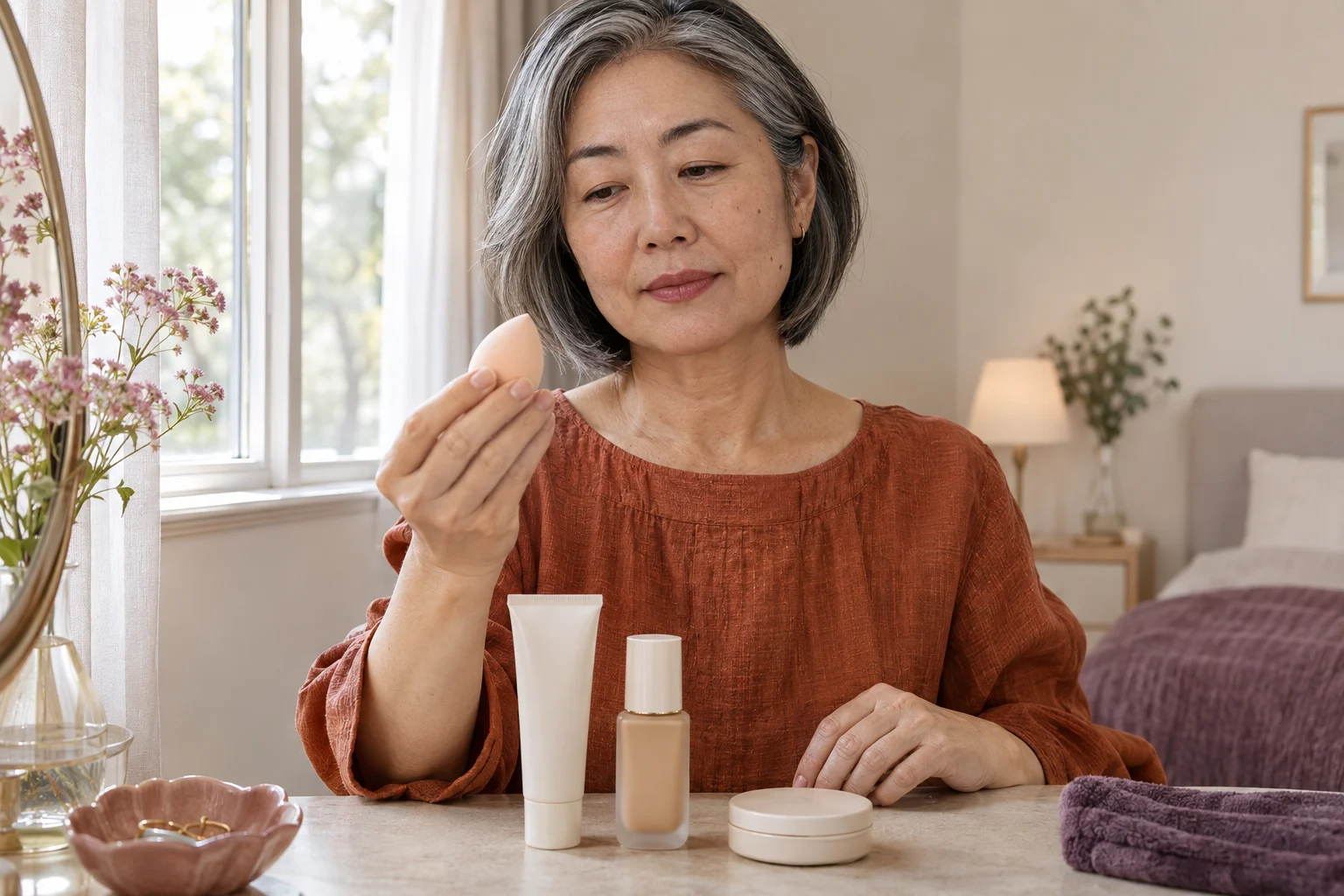
If you are changing foundation during GLP-1 treatment, review its sun-protection directions before choosing a sheer finish.
What the measurements tell you
Researchers weighed products and measured facial area. The analyses included 63 sunscreen, 30 liquid-foundation and 28 powder-foundation applications. Five powder measurements were excluded after calculated amounts were zero or negative; transfer of the underlying base to the applicator was a possible explanation. These measurements do not assign an SPF to your makeup routine. [1]
Application density measures product mass per area of skin. It does not convert sponge taps into an SPF rating.
Read the sun-protection label separately
FDA explains that SPF primarily indicates protection against UVB radiation, while broad-spectrum sunscreen also protects against UVA. SPF does not tell you how many hours you can stay in the sun. Water-resistant labeling specifies 40 or 80 minutes during swimming or sweating. [4]
FDA also notes that makeup carrying sunscreen claims must meet the requirements for both cosmetics and drugs. [5] Look for the sun-protection directions on the package, including any Drug Facts panel. Keep the outer carton until you have read it if the bottle has limited space.
When comparing products, write down three items separately: the SPF number, whether broad-spectrum protection is stated, and the application directions. Record your preferred makeup amount in another line, such as “one pump, blended across cheeks and forehead.” That note describes your habit without treating it as a tested sunscreen dose.
Place makeup after the skin-care steps
The American Academy of Dermatology's general order is cleansing, prescribed medicine or other treatment, moisturizer and/or sunscreen, then makeup. Follow the instructions for any treatment you have been prescribed. [2]
For sunscreen selection, AAD recommends SPF 30 or higher, broad-spectrum protection and water resistance. Its application guidance says to apply 15 minutes before going outdoors and cover exposed areas, including the neck, ears and lips. [3]
Try your intended sequence at home before an outdoor event. Use the products according to their directions and check whether you can wear that combination comfortably. If you keep reducing the sunscreen amount to preserve the finish, take the products to a dermatologist or pharmacist and ask about an alternative you can apply as directed.
Make room for reapplication in the day's makeup plan
AAD advises reapplying sunscreen every two hours outdoors and immediately after swimming or sweating. [3] FDA emphasizes that sunscreen belongs alongside protective clothing, shade and other sun-protection measures. [4]
Before leaving, decide where and when you will reapply, and carry the product you intend to use. A compact in your handbag is useful only if you know its directions and can follow them. If an elaborate makeup look prevents you from maintaining your sun-protection routine, simplify the look for that outing.
For example, an outdoor lunch after a morning appointment calls for a plan beyond getting the foundation right before breakfast. Pack what you need for the lunch, choose shaded seating and bring a hat. Do not use the appearance of intact foundation to decide that sun protection is still adequate.
This application study did not test GLP-1 users or prevention of weight-loss-related facial changes. For the broader evidence on sun-related aging, read the sun-protection guide. If melasma is the concern, review tinted sunscreen and visible-light questions with your dermatologist.

Printed book
How to Keep Your Face on GLP-1
$12.95 + free shipping
Order Now30 day money back guarantee
This article provides general education, not a diagnosis or an individual treatment plan. Medication information refers to US sources. Discuss medication, nutrition and cosmetic treatment decisions with qualified clinicians.
Read next
Skin & researchAcne Moisturizers: Hydration and Water Loss Had Different Results→Skin careAcne Scars During GLP-1: Identify the Mark Before Treatment→Sources
- The effect of on-site application density on the UV protection efficacy of sunscreensFujiwara and colleagues, Photodermatology, Photoimmunology & Photomedicine, 2022; first published October 25, 2021↩ Back to text
- Should I apply my skin care products in a certain order?American Academy of Dermatology↩ Back to text
- How to apply sunscreenAmerican Academy of Dermatology↩ Back to text
- Sunscreen: How to Help Protect Your Skin from the SunUS Food and Drug Administration↩ Back to text
- MakeupUS Food and Drug Administration↩ Back to text