
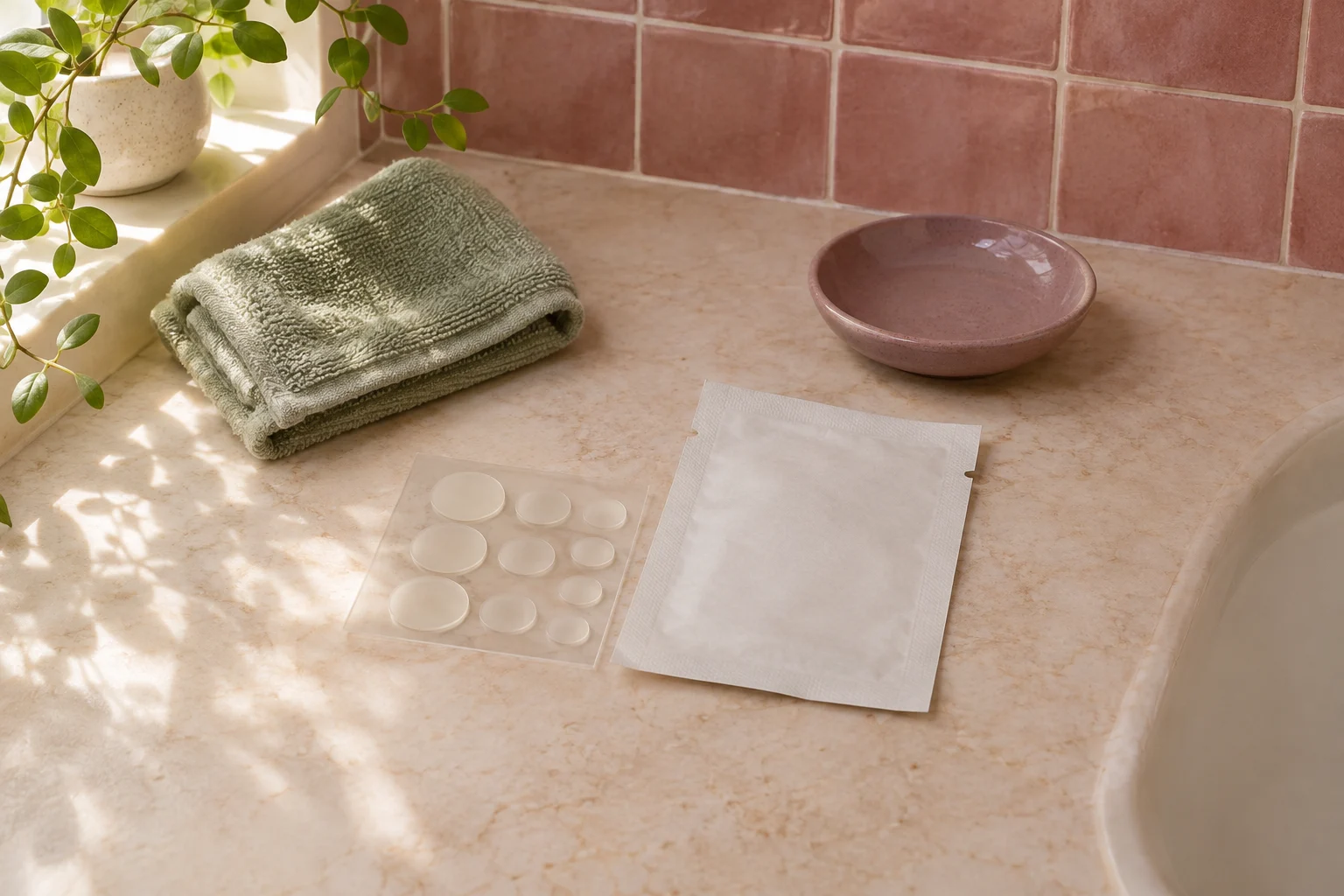
A hydrocolloid patch can have a place in an acne routine, but a promise to flatten a spot overnight needs a close look at the evidence. Consider what a particular study measured before adding a box to your routine during GLP-1 treatment.
The groups started with different scores
Mean overall severity fell from 1.80 to 0.43 with the dressing and from 1.08 to 0.80 with tape. Those starting values matter when interpreting the reported changes. These are severity-scale averages, not percentages of participants whose acne cleared. No significant adverse events were identified in either group. [1]
My reading is that the short, small comparison warrants caution about long-term promises. I could not examine randomization or masking in detail from the abstract. Ask for evidence on the specific patch being sold.
Check what the seller says will change
Write down the claim before looking at the before-and-after image. Is the seller promising a less noticeable existing spot, fewer future breakouts or removal of a lasting mark? Ask for results that measure that same outcome, with a comparison group and a stated follow-up period.
This pilot cannot establish the cause of a breakout during GLP-1 treatment.
Keep the patch within an acne-care plan
AAD says a hydrocolloid acne patch may protect skin and improve healing. It also advises against popping a deep, painful pimple: squeezing or picking increases the risks of infection, discoloration and scarring. Seek a dermatologist if a deep, painful spot persists after home care or if several develop. [2]
For ongoing acne, AAD recommends matching treatment to the type of blemish and using gentle skin care. Its overview explains that reducing redness or swelling can make a spot less noticeable overnight, while clearing blemishes and preventing new ones takes longer. It advises using the same treatment for six to eight weeks to see improvement. [3]
When reviewing a product, read its material and ingredient list as well as the wear and removal directions. If you already use an acne prescription, ask your pharmacist or prescriber how that particular patch fits the instructions. A photograph of a similar-looking sticker cannot answer that question.
For related care, read the deep-pimple assessment guide and the article on identifying acne marks before treatment.

Printed book
How to Keep Your Face on GLP-1
$12.95 + free shipping
Order Now30 day money back guarantee
This article provides general education, not a diagnosis or an individual treatment plan. Medication information refers to US sources. Discuss medication, nutrition and cosmetic treatment decisions with qualified clinicians.
Read next
Skin & researchAcne Moisturizers: Hydration and Water Loss Had Different Results→Skin careAcne Scars During GLP-1: Identify the Mark Before Treatment→Sources
- A pilot study on efficacy treatment of acne vulgaris using a new method: results of a randomized double-blind trial with Acne DressingChao and colleagues, Journal of Cosmetic Science, 2006; primary study abstract↩ Back to text
- How to treat a deep, painful pimple at homeAmerican Academy of Dermatology↩ Back to text
- Acne: OverviewAmerican Academy of Dermatology↩ Back to text