
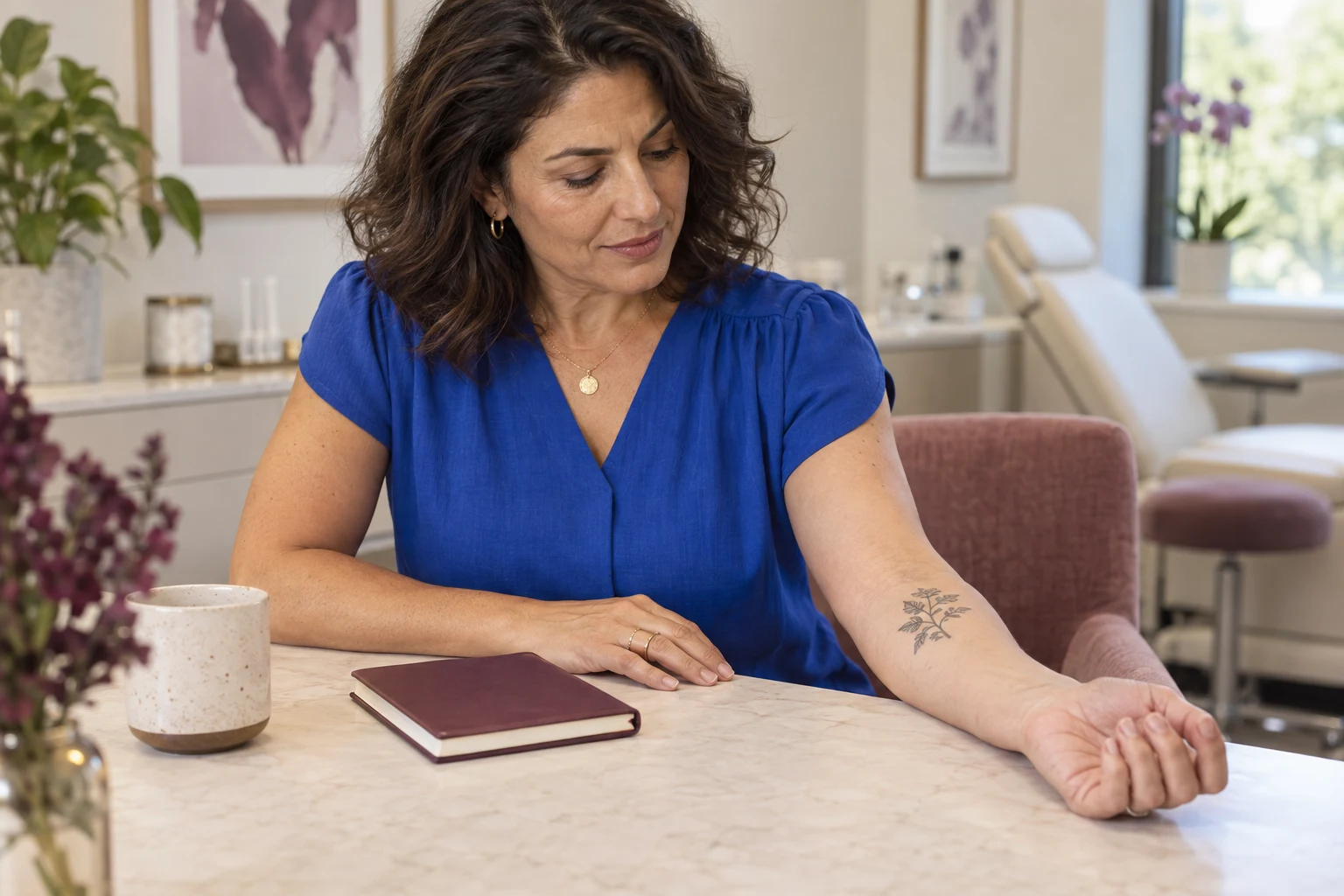
Considering a tattoo refresh during GLP-1 treatment? Discuss removal before buying a treatment package.
Bring your medication and scar history
AAD recommends consulting a board-certified dermatologist. The assessment includes tattoo age, location and colors, your health, medicines and any history of raised scars. Include your GLP-1 prescription in that discussion. [2]
Ask about the treatment sequence
FDA describes multiple sessions with healing time between them. Tattoo size and colors affect the number and length of treatments. Possible harms include lighter skin, scarring and infection. [1]
Avoid a home removal experiment
FDA has not approved tattoo-removal creams, ointments or home kits. These products cannot reach ink in the deeper dermis and may cause burns or scars. [1]
Plan clothing for the treated area
AAD advises following the dermatologist's home-care instructions and protecting treated skin from sun for three months. It recommends covering the area with clothing that blocks light completely. Ask how your appointments fit around travel and outdoor activities. [2]
These US sources offer general guidance, not GLP-1-specific removal evidence or a cosmetic guarantee. For a different ink decision, read our permanent brow makeup guide.

Printed book
How to Keep Your Face on GLP-1
$12.95 + free shipping
Order Now30 day money back guarantee
This article provides general education, not a diagnosis or an individual treatment plan. Medication information refers to US sources. Discuss medication, nutrition and cosmetic treatment decisions with qualified clinicians.
Read next
Body & appearanceBack Breakouts During GLP-1: A Workout Skin-Care Plan→Body & recoveryBody Contouring After GLP-1 Weight Loss: Plan Home Recovery→Sources
- Tattoo Removal: Options and ResultsUS Food and Drug Administration↩ Back to text
- Tattoo removal: Lasers outshine other methodsAmerican Academy of Dermatology↩ Back to text